A fast track to heavyweight stripers for young anglers!
As the summer progresses, catching big striped bass on artificial lures gets harder. Big bass become more selective, ignoring spoons, soft plastics, topwater and yes, even turning up their noses at everybody’s new favorite lure, the glide bait. While catching stripers utilizing new and exciting techniques is… well… new and exciting, these are not exactly kid-friendly ways to fish. Each requires the angler to impart some technique or action onto the lure to present them effectively.
If you don’t pay attention to this late summer seasonal change, you and your crew could miss out on a lot of good fishing where the tried-and-true, “old school” methods would be more effective. When water temps are climbing, sharpies turn their focus to live bait. With live bunker becoming harder to acquire on the water in recent seasons, I have been looking back to eels as a way to put my crew of young anglers on bigger fish in the daylight hours.
Kid Friendly
Kids and eels are a combination that most might think is a recipe for the dreaded eel knot at the end of your line, but it works! The magic of slinging eels is that there is no added action needed from the angler to entice a bite. Another significant benefit to fishing with live eels is that they can be bought at your local bait and tackle shop, removing the time normally spent gathering live bait on the water. Eliminating catching bait at the start of a trip preserves valuable time with a young crew. This type of fishing is about as kid-friendly as it gets!
Fishing with young anglers requires a deliberate approach. I reserve the best fishing opportunities on the boat for my family. I start planning kid-focused trips no more than two or three days in advance, in this window the forecast is more reliable. It is best to watch the NOAA marine weather forecast closely for ideal conditions such as calm seas with winds zero to five knots and seas of a foot or less. If the forecast calls for winds more than 10 knots and seas above 2 feet, I leave the kids at home and fish with a more experienced crew.
Hardcore anglers should also keep the daytime eel strategy in mind as well. If you are doing 100% of your eeling in the dark, you are missing out on some quality fish that you could be catching while catching up on sleep after dark.
No Stress = Success
Ideally, you will already have a location on the fish, and taken the time to “pre-fish” to get dialed in just like you might do for a tournament. You certainly want to be confident when waking up the children before dawn. Setting yourself up for success in this way helps “hook” the next generation of anglers.
It’s the slow trips that can turn them away from the sport. If you string enough good fishing experiences together early on, you’re more likely to have a fishing buddy for life. For an extra measure, anything that you can do to keep your young crew comfortable is worthwhile effort, whether it’s going a little slower to the fishing spot or packing extra towels and clothes ahead of time. Of course, top shelf sports drinks and snacks are a must. “Lollipops at 7 a.m.? Sure, no problem!”
When fishing with eels, drifting over a target rich environment at your favorite reef, rip or rock pile is the key to success. Targeting the hours before sunrise and after sunset are ideal for adult trips but with kids on the boat that timing doesn’t necessarily work. The couple of hours right after sunrise and leading into sunset can be very productive for a more kid-friendly style of fishing.
Tike Tackle
For the gear, conventional or spinning both work, and braid is recommended to help with increased sensitivity to feel the bite and reduced diameter to stay vertical when drifting. I prefer to fish convention when I am dropping down to the bottom. The rig is a typical three-way rig; connect your mainline to a three-way swivel, then tie 16 inches of 30-pound monofilament and a surgeon’s loop to connect your sinker and lastly, connect 5 feet of 50-pound fluorocarbon snelled to an 8/0 inline circle hook.
If you notice fish are showing higher in the water column, you can simply drop the sinker to float an eel or decrease the weight to help suspend the eel appropriately in the water column, right in the eyeline of the fish. When floating an eel, I prefer to use a spinning rod so the eel can be cast further away from the boat while drifting. Likely, bigger fish are hugging the bottom so be sure to have at least one rig fishing down deep.
The Process
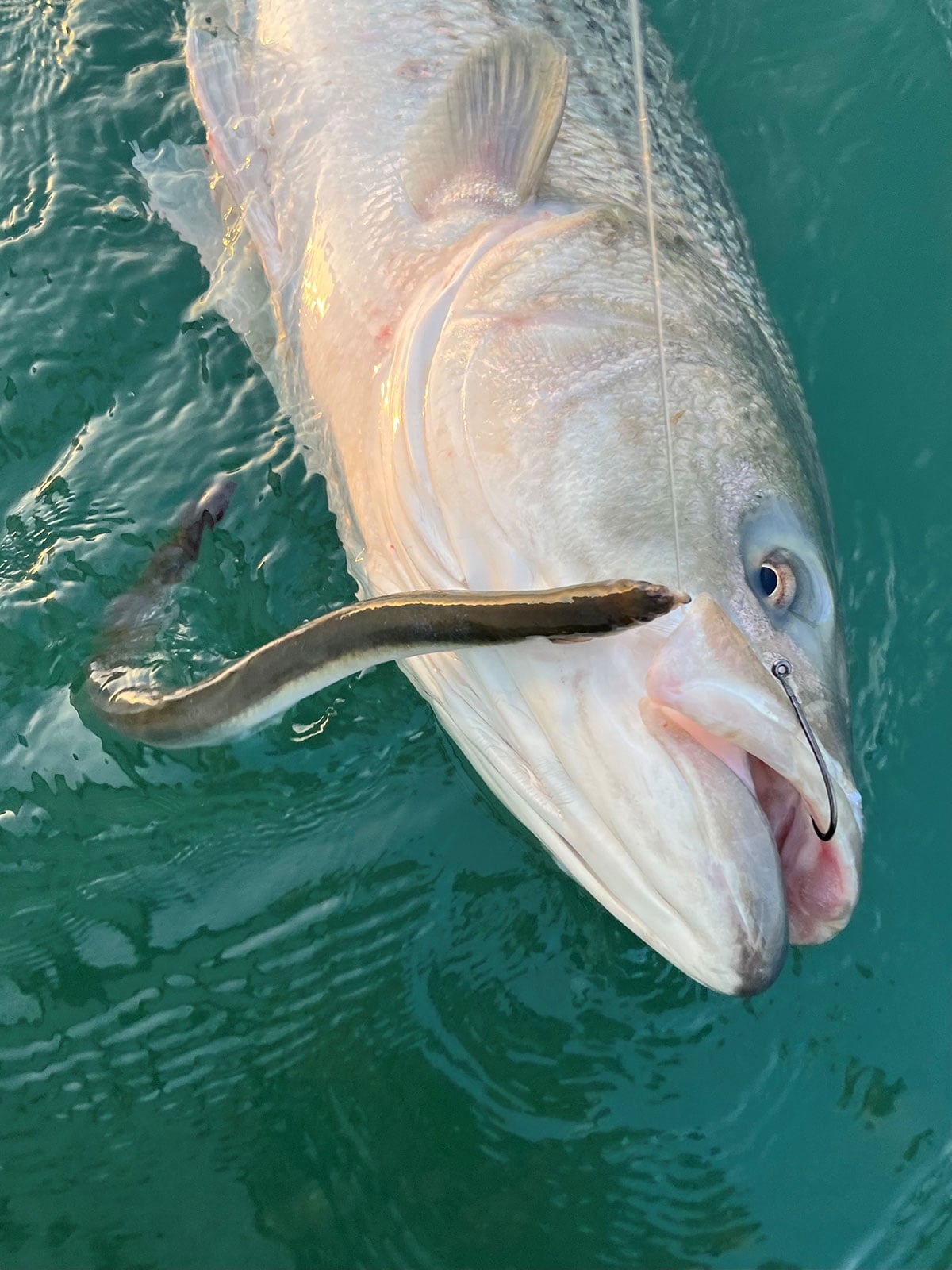
If things don’t go as planned, the eels themselves can be a form of entertainment for junior anglers. They are slimy and gross in ways that kids find hilarious and if one gets loose on the deck, that is sure to prompt some excitement. As for handling, I keep my eels in a bucket tucked away in my iced down cooler. The cold helps slow them down just enough to quickly get them on the hook and into the water. A small towel is essential for getting a handle on these slippery little snakes. Once one has been wrangled, the circle hook goes up through the bottom jaw and out the nostril and then you want to rapidly get the bait into the water.
My preferred method while fishing is to simply leave the rods in the rod holders and drift. With the eel being a smaller bait on the hook, the hookup ratio with the 8/0 circle hook is very high. Circle hooks are the perfect weapon when using eels. While it can take a bass a few attempts to get a bunker down, eels are eaten easily in a single gulp. When a bass grabs an eel, I will wait for a deep bend in the rod before instructing my crew to take the rod out of the rod holder and fight the fish. Some captains might want to handle removing the rod from its holder and then passing it to the child waiting as a safety measure against watching a setup go overboard. If your kids are anything like mine, they want to do it all on their own.
As a young angler gains experience, look to give them more responsibility to help them sharpen their skills. Let them bait their own hooks, or hold the rod and feel the pickup. When the time and conditions are right, you can look to introduce other ways of fishing that require more skill and experience from the angler.
Making it Memorable
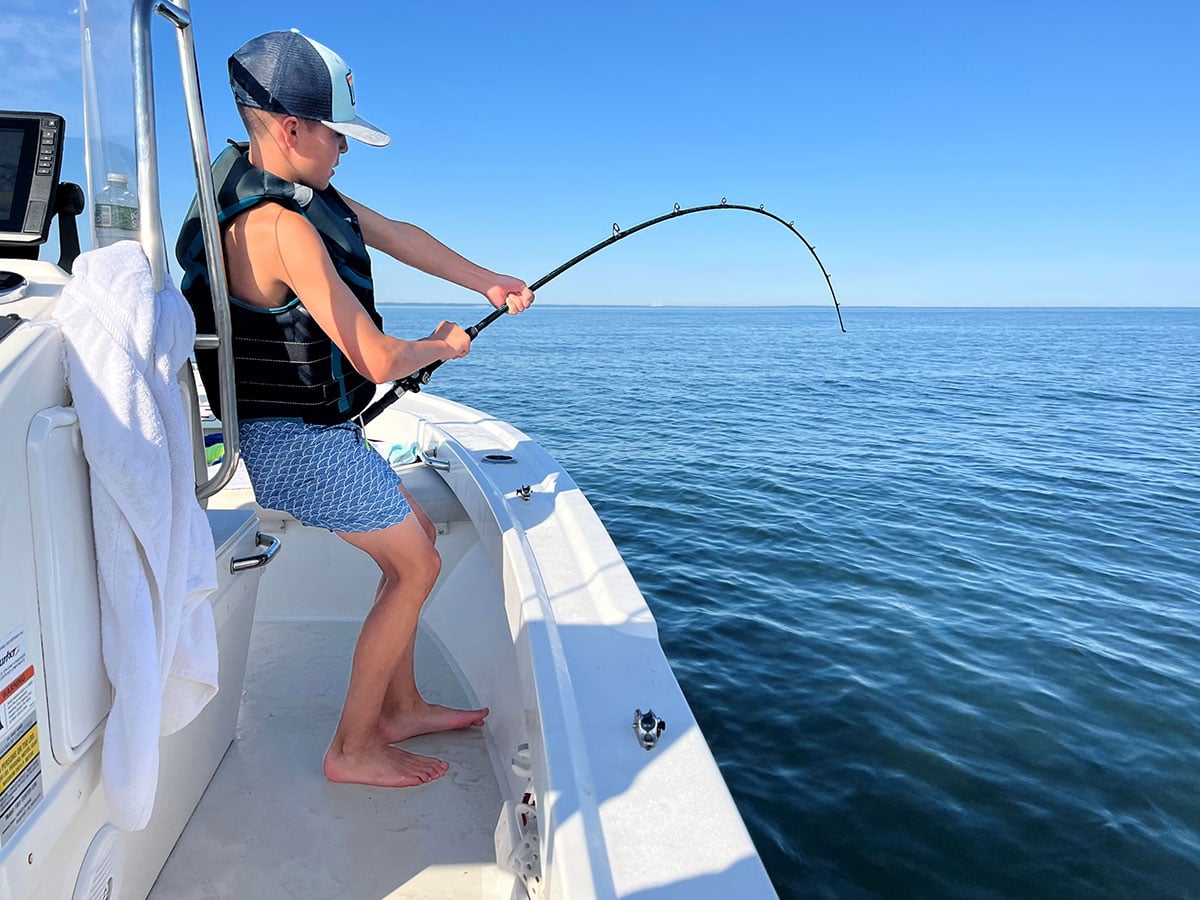
Once the fight is on, your instructions should be clear and concise. There are only three things to coach young anglers on; 1) hold on tight to the rod, 2) keep the rod bent and line tight (slack line is how fish win their freedom), and 3) don’t reel when the fish is pulling drag. Stay positive while coaching and avoid the urge to take over when you realize the fish is a good one. The fish stories, and photos, will be much better that way!
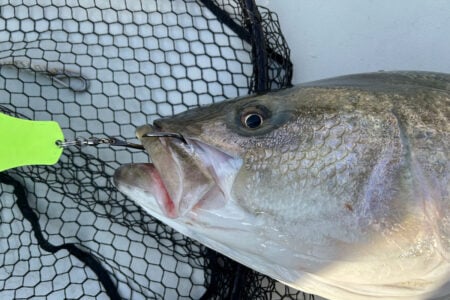
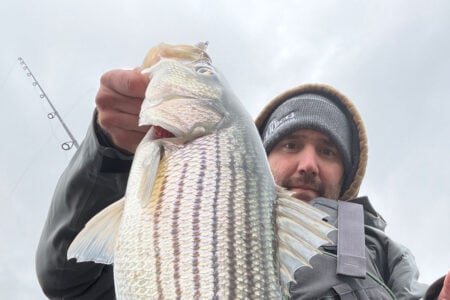
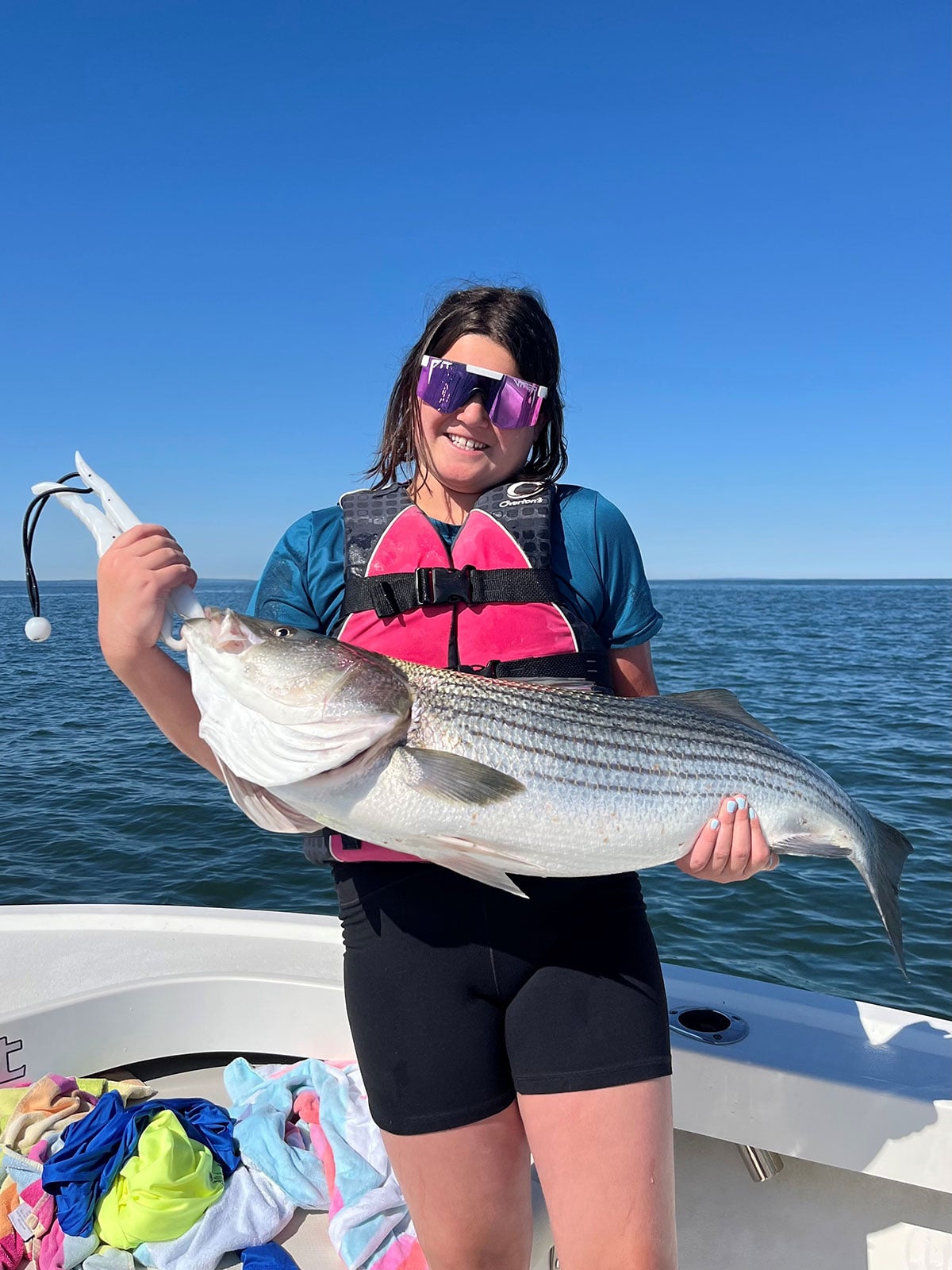
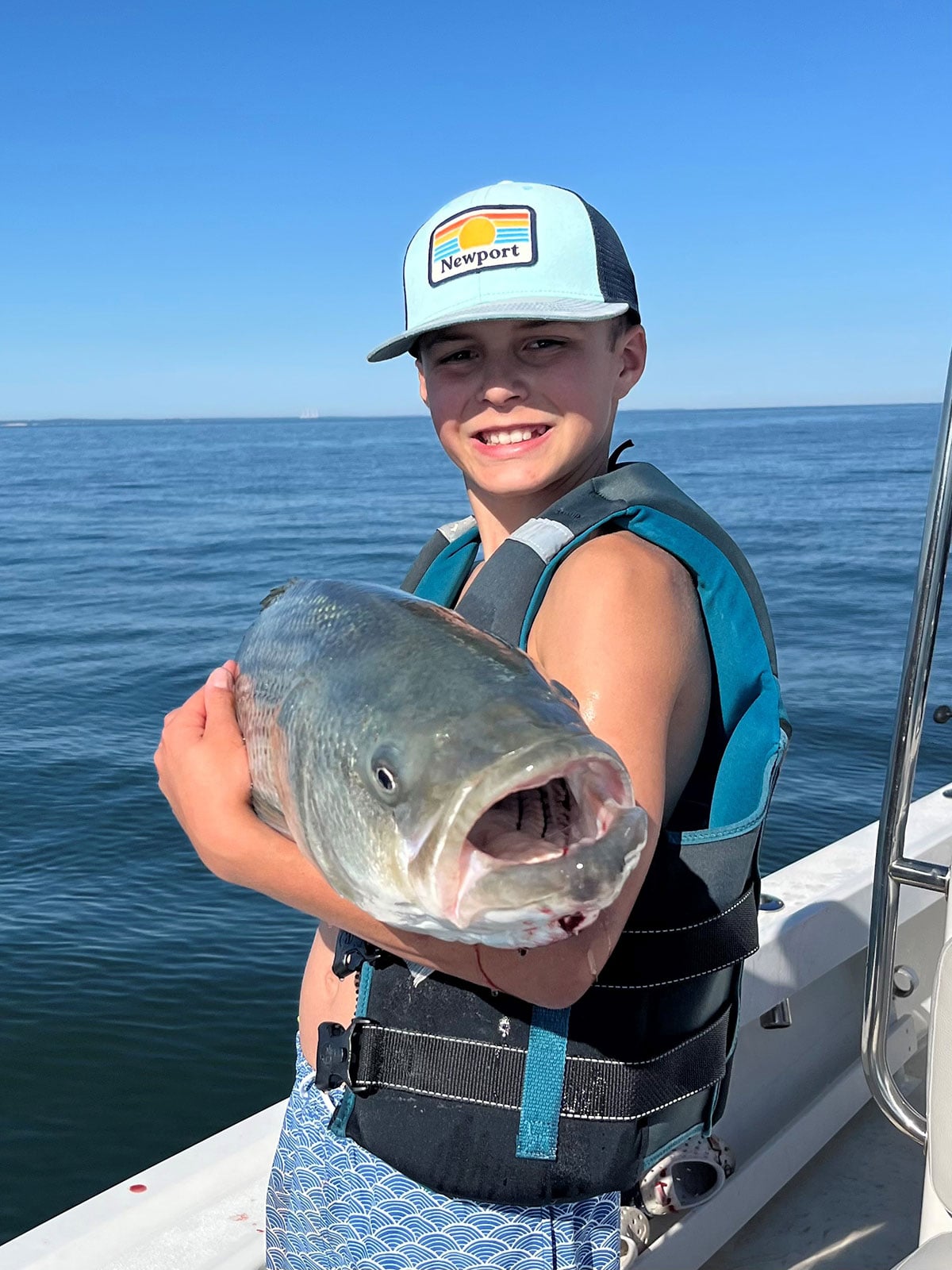
The photos accompanying this article were taken on one of the best days I have ever had striper fishing. While on a hot streak after fishing a few days solo, I decided to take my daughter Lauren (11) and nephew Cole (12) out just after sunrise and hit my target location with a bucket full of eels. Conditions were perfect and the fishfinder looked like it was on demo mode before I even had a line in. We had double hookups our first four drifts and my junior anglers each landed multiple fish over 30 pounds. Both kids fish with me several times a year and we all agreed this was by far the most fun we have ever had on the water. They proceeded to catch over 20 quality fish while the anglers around us appeared to be struggling to entice a bite. The captain of a nearby boat yelled out asking me, “Are those kids fishing eels?” Heck yes they were! And with good reason!