November can be a jigging angler’s paradise, from inshore to the edge!
As many of you might have surmised from reading my past articles, I am a dedicated jigging junkie and my love for this style of saltwater angling goes back 50+ years. The NLBN (No Live Bait Needed) lure company’s namesake has been my personal motto for the better part of the past three decades, no matter what type of fish are on the menu. And that goes for dead bait as well.
Whether slinging a bucktail, heavy metal, epoxy or aluminum jig, the feeling that you get when suddenly “coming tight” is second to none and is one of the most exhilarating, adrenaline fueled rushes in sport fishing. The knowledge that you, the angler made this happen with your personal retrieve speed, rod tip action, arm arc motions and jigging style gives you an innate satisfaction that is not achieved when trolling or bait fishing where something else often determines if you win or lose. You control the action and the game is to get as many hookups as possible.
I will frequently face off with my charter customers when bottom fishing in the late fall months and we’ll play the simple game of who can bring more fish to boatside, the bait folks or the jiggers. Historically, my experience has indicated that the competent jiggers will win this game more often than not, typically catching more and larger fish.
The November calendar of events includes a number of migrating coastal species that will all respond to your favorite jigs and jigging techniques.
Striped Bass
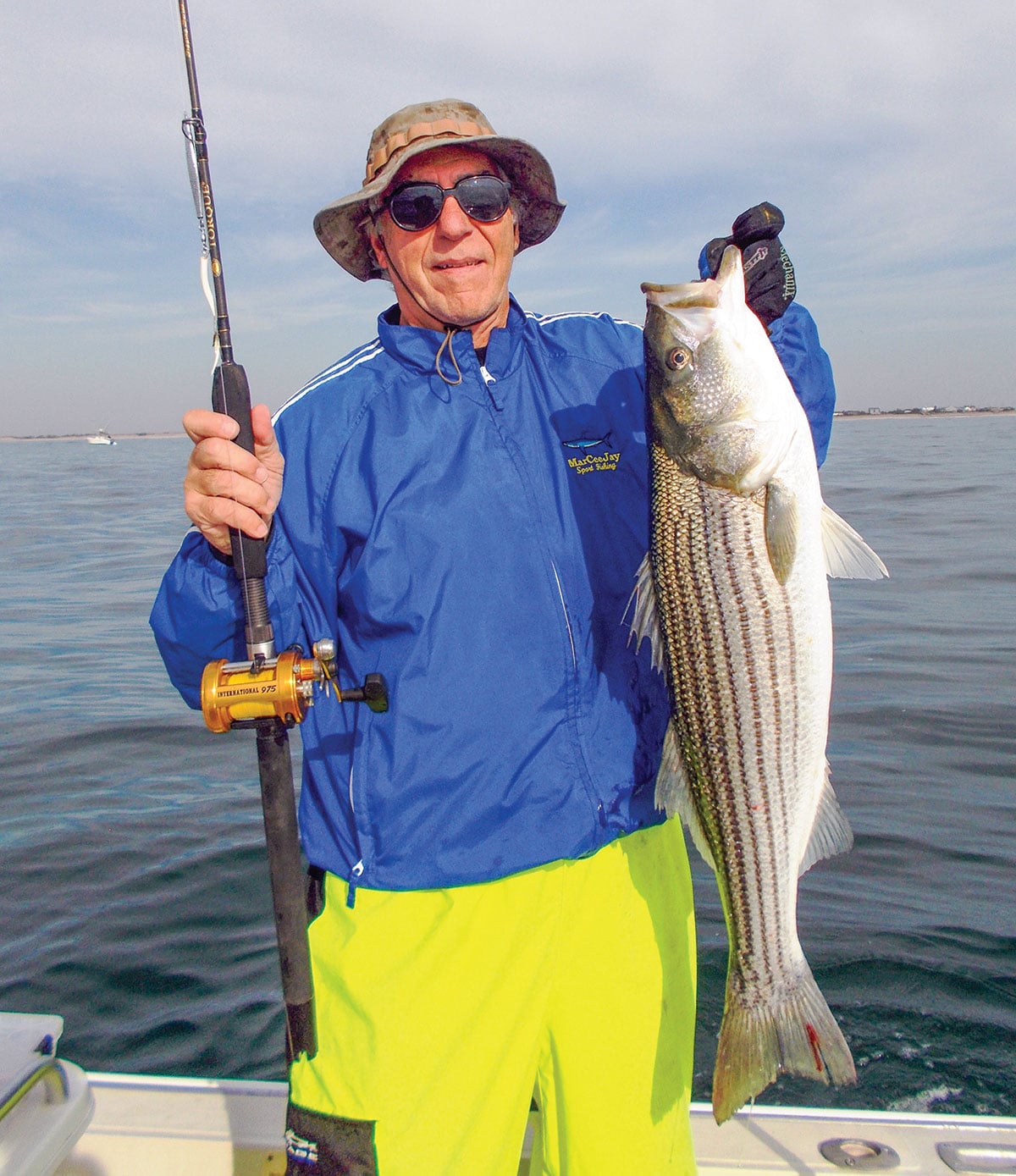
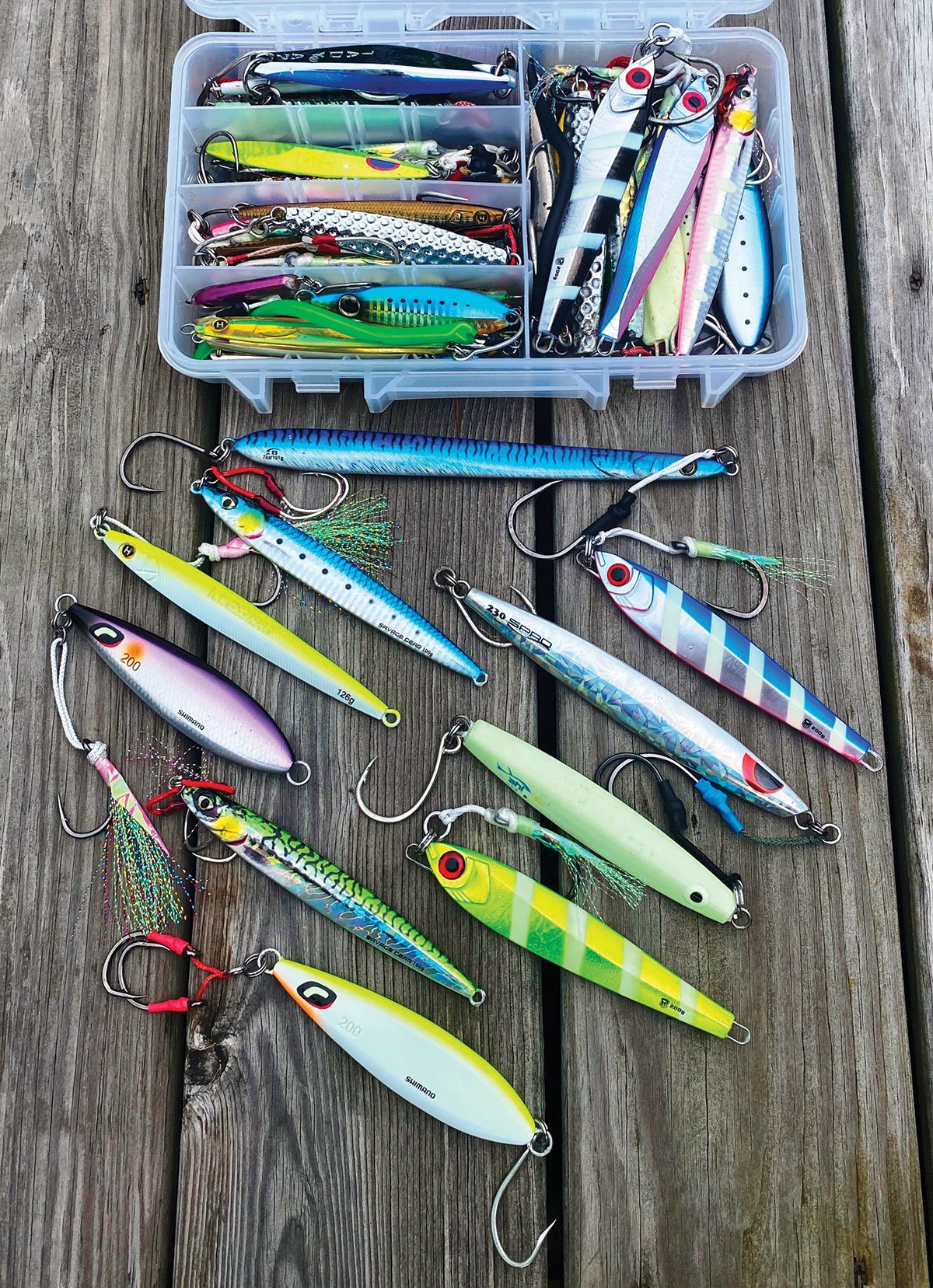
The striped bass migration is in full swing by this time of the year and whether you call home port somewhere in New England coastal waters, Long Island Sound, the south shore of Long Island, the Jersey Shore or the down along the Delmarva Peninsula, you are likely to find swarms of bass swimming near you at some point. Stripers, especially 18- to 30-inch fish, will typically move in massive schools that can include thousands of individuals, lighting up your echo sounder screen from top to bottom. Jigs can cover this action throughout the water table, get you down fast into the action zone and will get plenty of hits along the way. Slow sweeps up from the bottom (Yo-Yoing) and/or a slow squidding retrieve will both work. A sweep-and-drop steady retrieve will also elicit strikes, especially with lighter swimming jigs like sand eel or epoxy types.
Another telltale for finding the bass this time of year is to look for flocks of diving sea birds like gannets, shearwaters and gulls, which will let you know from a distance when a hot bite is in full swing. One of my secret weapons for consistently hooking stripers when the bunker are thick is the Tsunami Pro Flutter Spoon. This spoon/jig is yo-yoed at a specific depth where the fish are holding and can get an unbelievable amount of strikes when conditions are right.
Black Sea Bass
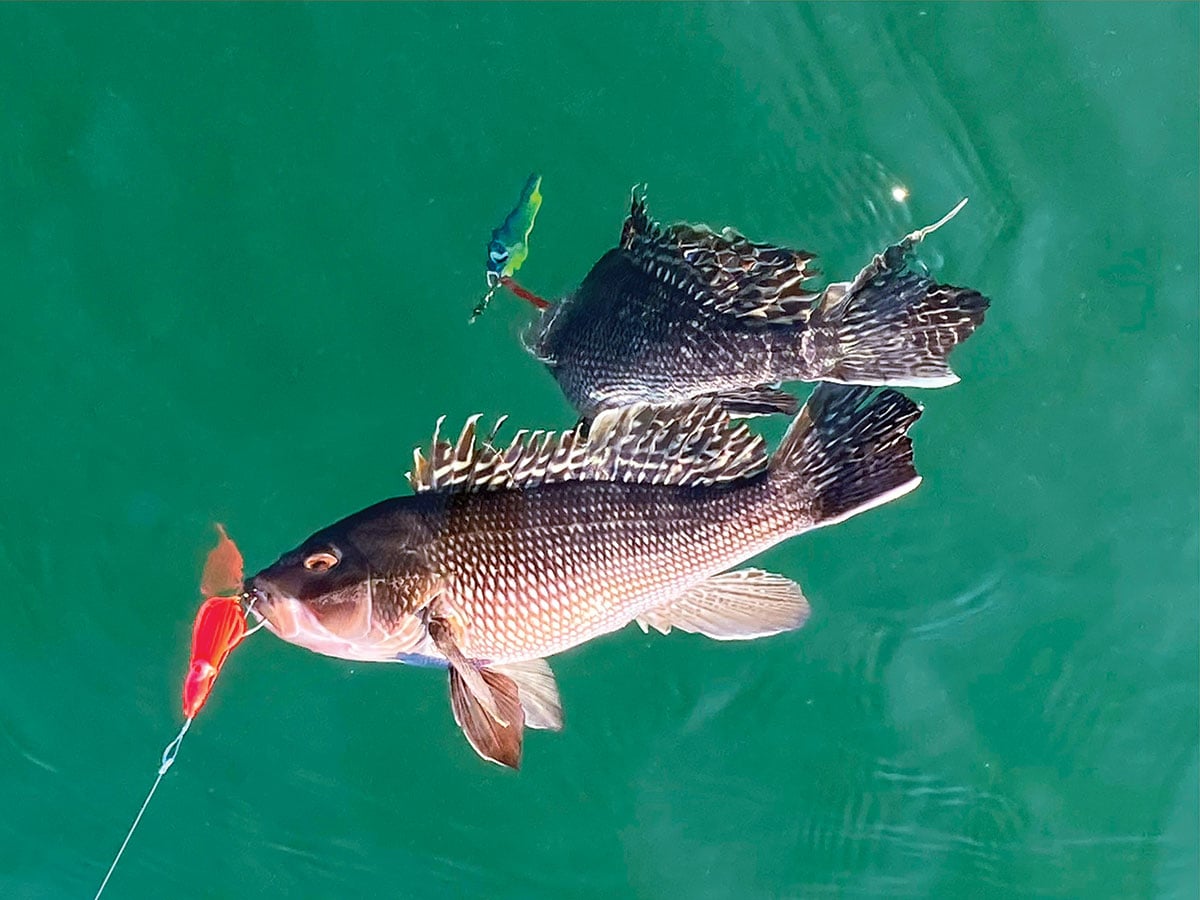
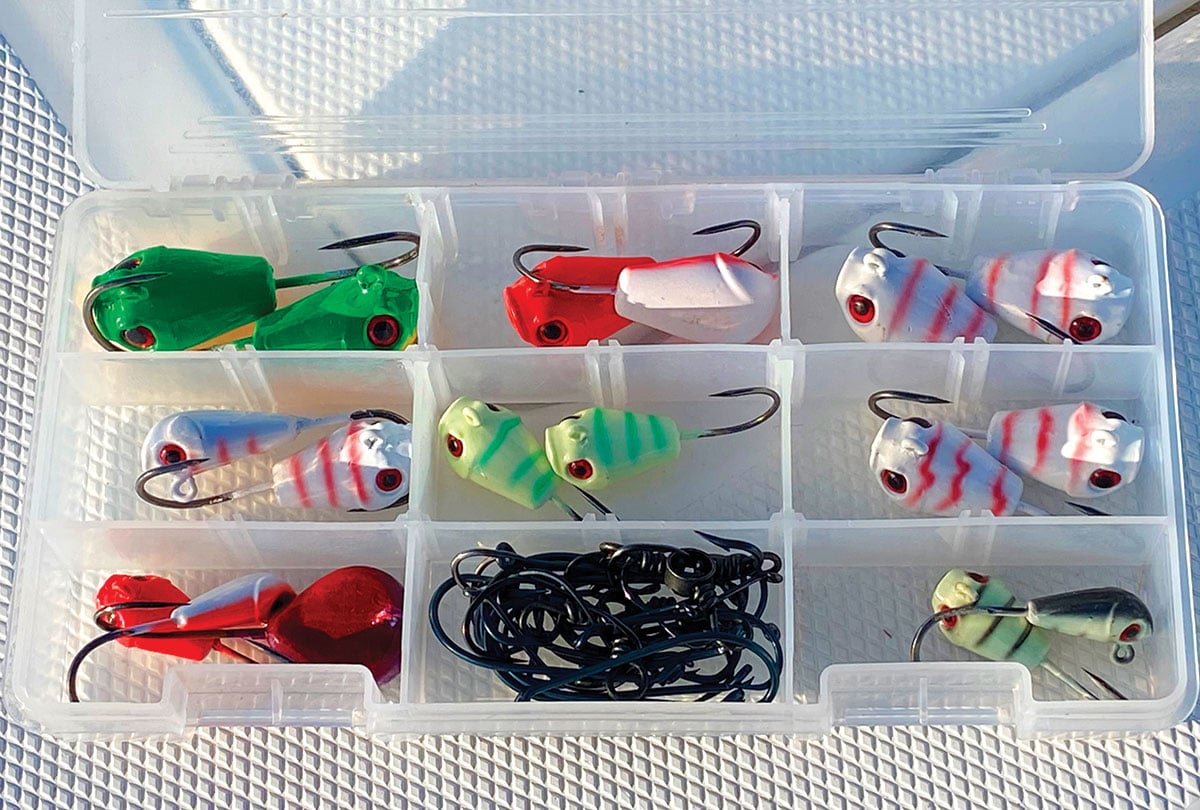
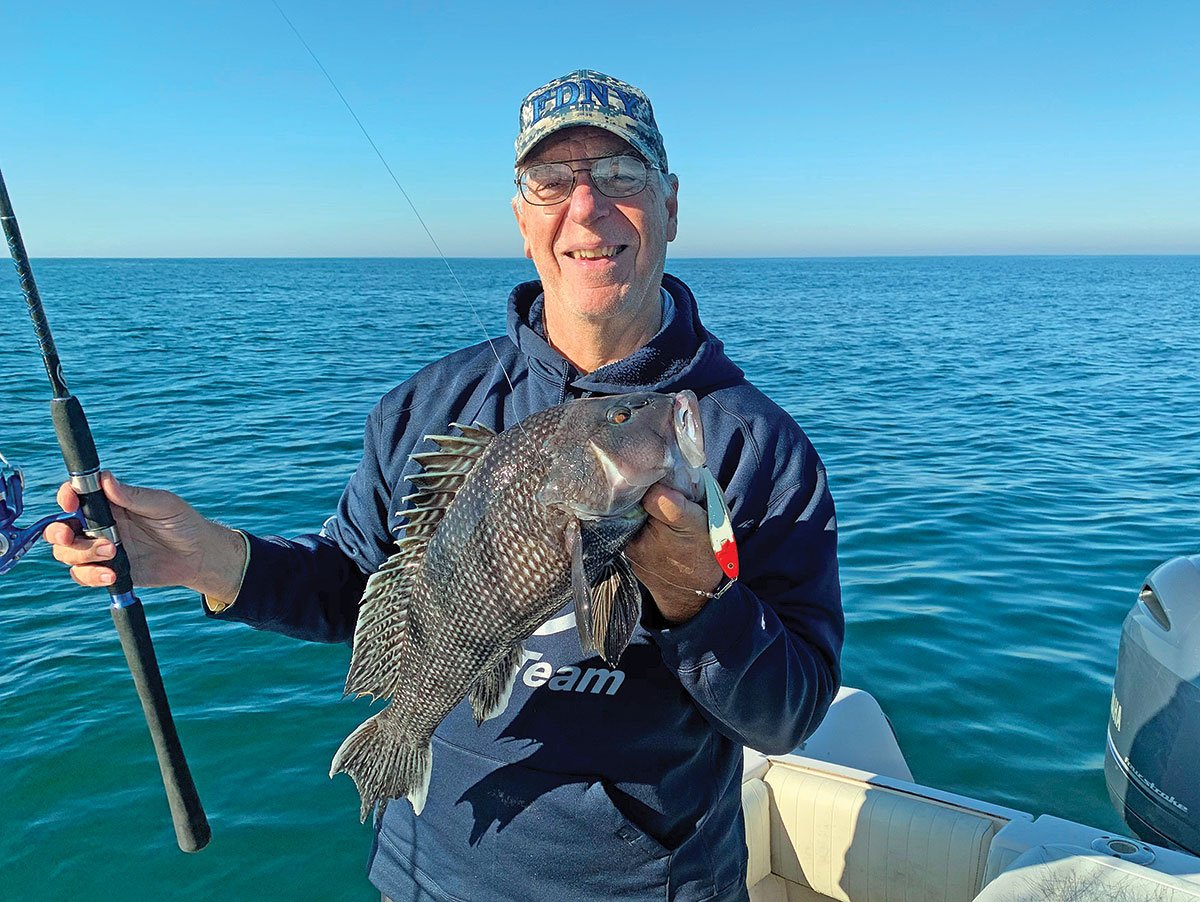
As I have demonstrated firsthand to hundreds of my charter fishing customers, sea bass are suckers for a well-placed jig in the strike zone. Bucktails, diamond jigs, other metal sand eel imitations, and soft plastic leadheads all will work at a given moment, relevant to water depth, wave action and current flow conditions. In the month of November, the majority of black sea bass are migrating out of inshore coastal areas and can usually be found on wrecks situated in 120- to 180-foot depths as they trek offshore to the continental shelf for their winter layover. At this time, precise positioning over these wrecks is not essential and I’ve found that being “in the neighborhood” anywhere from 50 to 100 feet away from the structure will get you a decent amount of action.
The problem with this strategy is that dogfish typically will make their presence known at this time of the year and will be a total nuisance, jumping on jigs that are resting on the bottom for more than a few seconds. Getting closer to the wreck will often solve the doggie problem, but will also increase the chance of you snagging some real estate and losing expensive jigs as you work the drift. This is where an electric trolling motor can be a total game changer and can really impact both the quantity and quality of your catch, holding you over precise areas of the bottom that are stacked with fish. I’ve had my best action snap-jigging, employing slow repetitive yo-yo lifts with drop-backs, and/or doing a slow squidding retrieve from five to ten cranks off the bottom, repeating this until there’s too much scope in the line, where the jig is retrieved to the surface and the process started over again.
Football Tunas
Both little tunny (aka false albacore) and Atlantic bonito will respond to jigs during the fall months in coastal waters ranging from 50 to 90 feet, where they are usually lurking and looking to ambush some migrating schools of baitfish. If they are moving fast and causing a ruckus on the surface, epoxy jigs like the Hogy san eel, Deadly Dicks, Acme Needlefish and others of that ilk will get those albies to strike and rip line off your reel like few others. This fishery is typically found in the top layer of the water column, from the surface and down to 15 feet.
The technique is to cast into or just beyond the school, reel as fast as possible like your life depended on it and hold on for that sudden strike. Both albies and bonito will also respond to medium and rapid retrieves up from the bottom. Looking at your echo sounder screen will identify what level of the water column these fish are frequenting at the moment to better target the focus of your casts. Small and large school tuna have been known to enter inshore waters in the weeks of November chasing forage, so don’t be shocked if these fish announce their presence by totally spooling one of your lightweight jigging reels.
Some additional migrating species that might attack your jigs during November depending on your location include porgies, Spanish mackerel, weakfish, bluefish, cod, pollock, red hake (ling), summer flounder and a variety of sharks. One of the biggest trends in the blackfish fishery over the past several years is the use of lima bean shaped jigs that are sweetened with a chunk of crab and sent to the bottom. I jumped on this bandwagon a few years back and have had some decent success working shallow 15- to 40-foot depths employing this method.
Be on the lookout for the usual signs of life and don’t be shocked if any of these other critters finds your jig tasty.
Conventional Wisdom
All four of my current go-to revolving spool reels are lever drag models. Why? Because they work for me and my jigging style and allow me to fine-tune the drag for every scenario as well and transitioning in and out of free-spool quickly for the constant drop-backs that active jig fishing requires. My basic setups are both Avet (made in USA) reels that I hand-picked from my local tackle shop. The smallest of these is the SXJ with a 5.3:1 gear ratio, which holds about 350 yards of 20-pound braid, with a 15- to 20-foot topshot of 40-pound mono (usually Berkley ProSpec). This is attached to a 6-foot long Shimano medium/heavy action TTJC60MH Talavera Type-J slow-pitch jigging rod that’s rated for up to 250-gram jigs and 50-pound PowerPro.
The bigger brother in my basic jigging setup is the Avet SX lever drag reel (also 5.3:1 gear ratio), spooled with 400 yards of 30-pound braid, with a similar 15- to 20-foot topshot of 40-poundProSpec. The rod I favor for this rig is Ugly Stick’s Tiger Elite model 6-foot, 6-inch USTEJG50100C631 that’s rated to sling 4- to 7-ounce jigs (112 to 200 grams). Both these rods, the Shimano Talavera and the Ugly Stick Tiger Elite, are under 6-1/2 feet in length and are absolutely perfect for use on my 228 EdgeWater CC that features an extended T-Top with overhead four-rod rocket launcher and two antennas, plus a leaning post with a six-rod rocket launcher. The incessant sweep up of the rod tip when jigging these somewhat shorter rods minimizes any fatal collisions or conflicts with these immovable impediments.
When it’s time to step up in jigging class due to the size, weight and nature of the quarry, the Shimano Speedmaster 8II is a smooth-as-silk lever drag reel loaded with 400 yards of 40-pound mono and equipped with a game-changing two-speed gearbox. Speedmasters are half the cost of their more expensive Talica and offer many of the same features at a more affordable price. Matched to a Trevala 40- to 80-pound TVC60HB fast action 6-foot jigging rod, this combo is more adept at heavy lifting for big bass, cod, alligator blues or whatever. When a tuna or shark presents itself in the jigging mix, the next-step-up Speedmaster 12II takes care of business, spooled with 300-plus yards of 65-pound braid with a 60-pound mono topshot and matched to a Shimano Grappler Type J GRPJC58XXH rod.
Spinning Selections
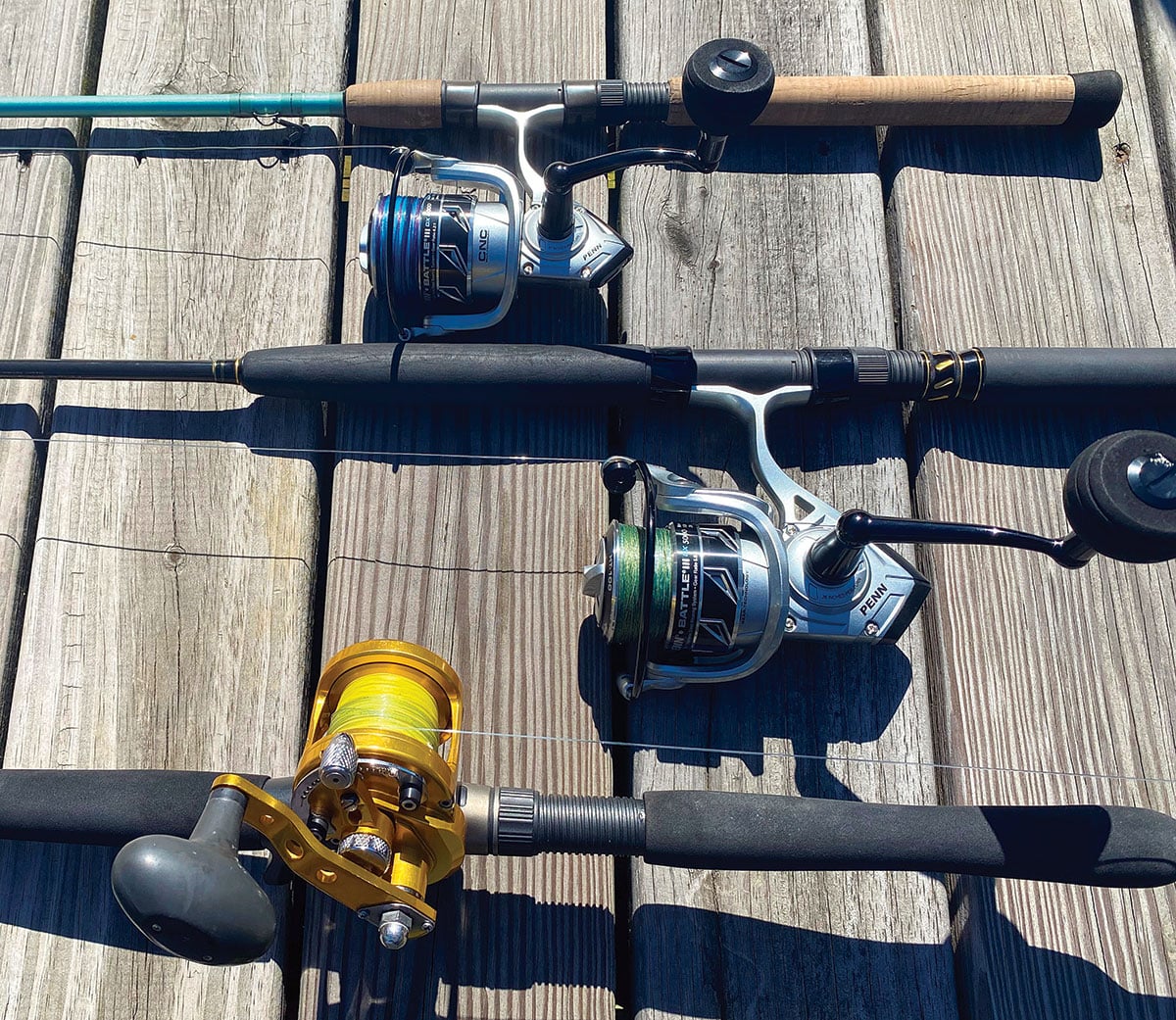
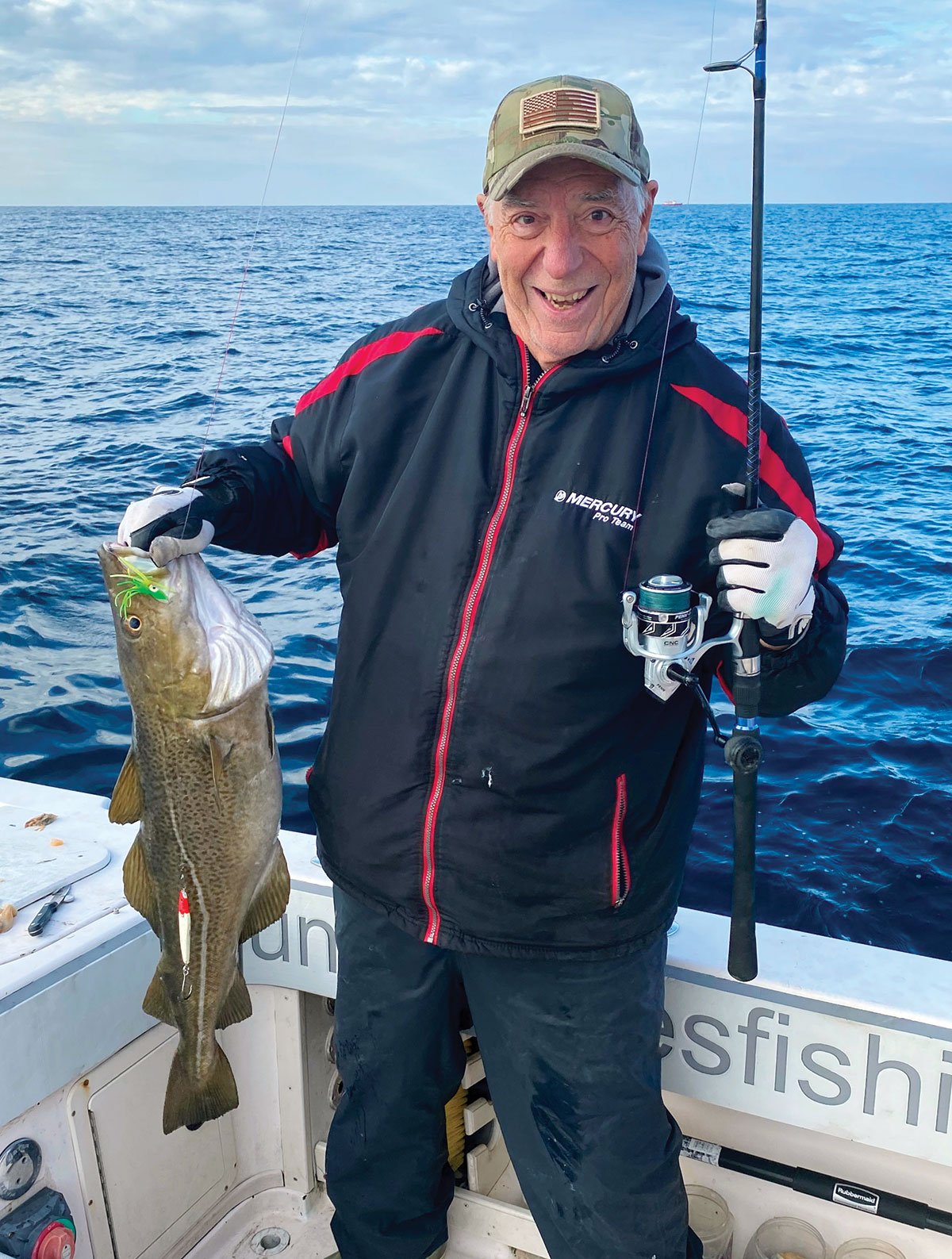
For November spin jigging duties, I keep it very simple and affordable. My two go-to outfits are the Penn Battle III DX (dealer exclusive) silver spinners in the 4000 and 5000 sizes. Be advised that Penn introduced new upgraded Battle IV models last season, but I am still getting great mileage out of my original Battle IIIs that were purchase the year before. The Penn Battle spinners meet my criteria for being bulletproof, reliable and affordable. They are perfect for casting jigs to swarms of stripers, blues, or albies that are crashing bait under the birds. I prefer the silver DX (dealer exclusive) models on all my Penn Battle III/IV and Slammer IV spinners due to their upgraded CNC gear sets and extra shaft bearings, which allow them to stand up to the relentless stress of higher drag settings required to battle larger gamefish.
Rigged with 300 yards of 15-pound braid with a 15-foot, 30-pound mono topshot, the handy Battle III 4000 DX spinner is my go-to snap-jigging outfit when drifting near wrecks or reefs and presenting 1- to 2-ounce bucktails or metal jigs on the bottom in deep water. It’s also an ideal outfit for casting and fast-retrieving epoxy jigs and Deadly Dicks for falsies, Spanish mackerel and Atlantic bonito when they are feeding under swarms of sea birds. Max drag on the Penn Battle III/IV 4000 series DX reels is 15 pounds. I mate this to a 6-foot, 3-inch Tsunami Sapphire XT Pro rod and it’s a great tool to handle this combo’s multi-mission task set.
My heavier Slammer III 5000 series reel is one step up from the aforementioned spin combo and has tamed a number of inshore gamefish for me ranging from big stripers and blues, heavyweight false albacore, inshore sharks and the occasional schoolie bluefin that venture inshore in the waning months of the season crashing the remnants of the migrating bunker and mullet schools. This 5000 series Battle III/IV offers a significant upgrade in drag power compared to her little sister, rated at 25 pounds max due to the larger spool and drag stack. She’ll hold 300 yards of 30-pound test and will do everything that her sibling can do, but with a wider range of capability when targeting larger fish. I’ll finish it off with a 20-foot topshot of 40-pound Berkley ProSpec mono and then attach this reel to an Ugly Stick Tiger Elite model USTEJG50100S661 rod. This stick measures 6-1/2 feet in length and is rated for 50- to 100-pound braid. This combo can stand up to just about anything I throw its way, easily tossing jigs in excess of 6 ounces without overloading the tip, and has what it takes to survive multiple big game battles.
The few constants of November are that it’s cold, dark, with a low sun angle and typically gray, overcast skies. It can definitely be very unfriendly if you are unprepared. Dressing for the occasion is the first step to enjoying your jigging adventure and it’s easier to take off layers of clothing if you get too warm than it is to add outerwear that you don’t have if you’re cold, so be sure to have more than less when you head out for your November sorties. Adding a lightweight, water resistant windbreaker over your outer hoodie is always a plus, along with gloves that allow you a good amount a “feel” with your line, rod and reel while doing their job.
Footwear is important too and I normally replace my standard ankle-high XtraTuf with the commercial grade fleece-lined boots of the same profile. Add some thermal or thick wool blend socks, a hat on top (one that won’t blow off) and some polarized sunglasses and you’re ready for the elements. Choose your days wisely, factor in limited drive time during daylight hours and be safe out there.