If you’re looking to catch more bones, stock up on plastic swimmers!
Some years back, I was wrapping up a successful shore albie excursion with a couple of little tunny and a Spanish mackerel under my belt, when I decided to head to a local raw bar for a little refreshment. As part of my routine, I swung by a slight overlook with a grand view of Nantucket Sound. Leaning against the rail atop the bluff, I squinted toward the east peering down at an inlet where the tide was slowing, as it approached its flood max.
What at first appeared to be whitecaps in the afternoon breeze soon revealed itself to be a frothy, boiling mass of tropical visitors. The blistering speed of the frenzy proved this was no school of bass or blues. Suspecting albies, I grabbed my surf bag, scurried down the sandy steps to the jetty, and waded to the point to intercept the fast-approaching silver.
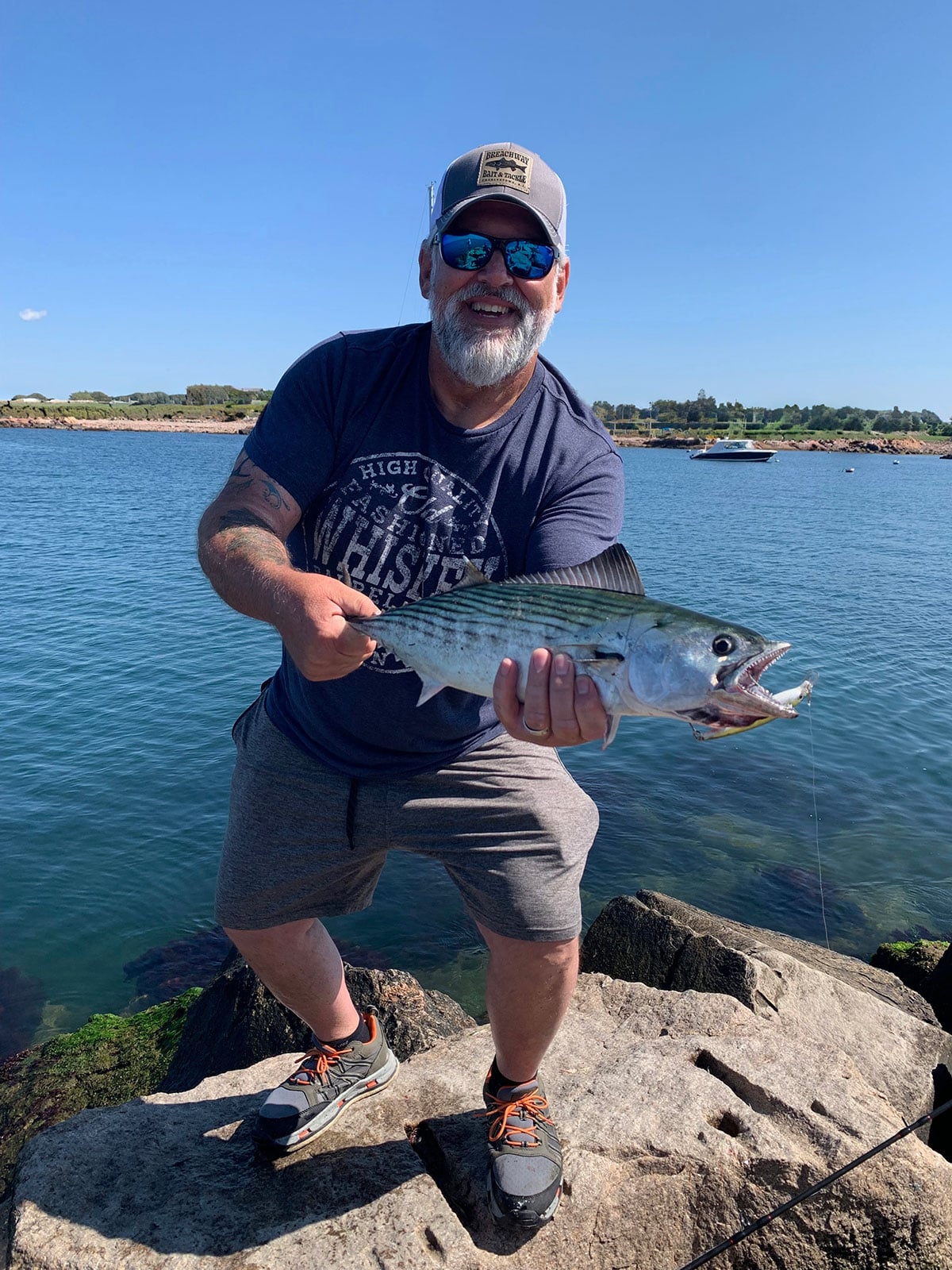
I slung an epoxy jig dead center into the chaos. I was tight in seconds, my quarry melting line off the spool as it rocketed down the beach. Fighting from the sand, I finally got a visual and realized this was no false albacore; it was my first shore bonito from the southside of Cape Cod. It was a beautiful torpedo, highlighted by a stunning green back with wavy, horizontal stripes and faded vertical bars. That fish capped off my first inshore pelagic slam (albie, bonito, and Spanish mackerel) from the sand.
Historically, my late-summer excursions have focused strictly on albies. I never really targeted bonito, as they were much rarer from the shore unless you were on Martha’s Vineyard or Nantucket. But that changed when an incredible number of small bonito began appearing in the Cape Cod Canal, alongside a growing shore fishery of larger specimens off Provincetown. Today, we have a blossoming shore fishery for these rockets.
The locations and techniques run similar to albie fishing: jetties with current, deep-water harbors, and shorelines with ledges and troughs near inlets. While early morning and late afternoon are preferred, a midday incoming tide can suddenly explode with crazed “bones” blowing up peanut bunker and anchovies.
Offshore hunters target bonito early in the season around “The Hooter” off Martha’s Vineyard, typically trolling swimming plugs like Yo-Zuri’s Crystal Minnow or casting epoxy jigs. However, Provincetown’s Race Point now sees a major influx of bonito, with many caught by striped bass anglers.
For the surfcaster, most still favor epoxy jigs and soft plastics like Albie Snax. However, sticking only to jigs can severely limit your success, especially when false albacore are in a down-cycle. If you know bonito are showing in good numbers, shifting your focus to the bones will not only increase your catch, but also put some tasty fish in the cooler.
To target them effectively, you must incorporate swimming plugs. Bones love swimmers—small, medium, or large—and are voracious feeders. During an outing to southern Rhode Island, I was blanking on epoxies when I saw another angler land a nice bonito on a swimmer. I immediately swapped my jig for a Yo-Zuri Crystal Minnow. On my first cast, I hooked a large bluefish that smashed my plug against the rocks, cracking it.
I reluctantly tied on a larger, mackerel-colored Yo-Zuri Mag Minnow—a lure more suited to the Canal rather than chasing pint-sized pelagics. Spying a quick splash near a mooring ball, I cast into the fading ripples and was immediately covered up by a horde of hungry bones. The numbers piled up for the next few hours, leaving me with a big smile and a brand-new approach.
Regarding tackle, stick with your typical light albie outfits using 7.5- to 9-foot rods. I like Black Hole ultralights, Jigging World light 8-footers, and Lamiglas 9-footers for those far-out fish. You do not need a loaded surf bag, but you must expand your lure options to include swimming plugs from 3/4-ounce to 1.5 ounces. My favorites include the Yo-Zuri Crystal Minnow, Yo-Zuri Mag Minnow, Yo-Zuri Fingerling, and the heavy Pink Panther swimmers from Jiggy Lures. Color is a personal choice, but these fish have a preference for gaudy schemes like chartreuse, pink, and bright silver, though bone and green mackerel are always reliable.
Over these last several years, bonito catches have surged throughout southern New England, and while we’ve seen some steady summer action, the rubber really meets the road in September. Your epoxies and plastics will catch plenty of bonito, but packing a few swimmers might just make you high-hook on the jetty! Grab your mapbook, check the tides, and go dig those shore bones. I’ll see you in the suds!