The end of menhaden reduction in New Jersey, and the old Great Bay Fish Factory.
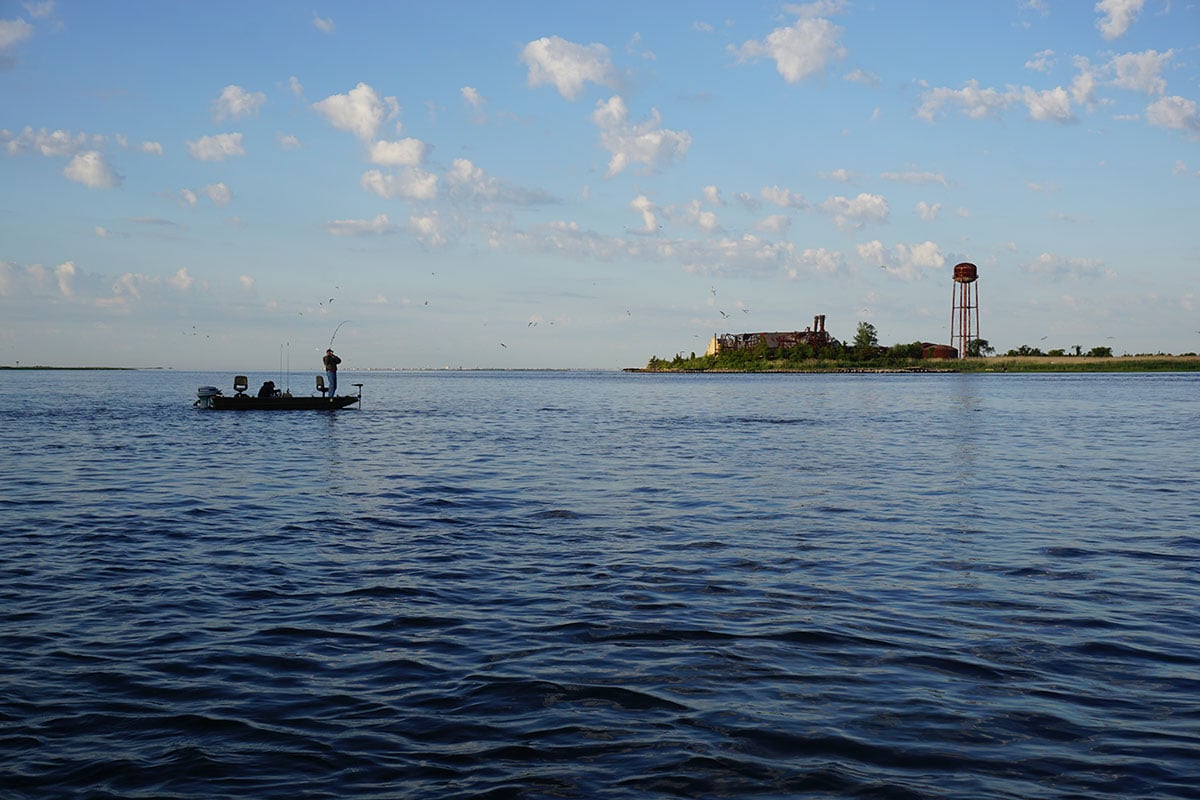
Sitting on Crab Island in the middle of Great Bay stands a factory that has withstood hurricanes, fires, and everything else that Mother Nature can produce. But it is starting to show its age from the hard northeast winds and salt air. Still, it has been a local landmark for mariners and people alone for 155 years.
If you talk to locals about it they will tell you of the horrendous stench that would cover the town when the wind was blowing right and if you drive down the road to see it the greenheads will carry you away.
Menhaden, mossbunker, bunker, pogies, whatever you call it, this oily baitfish was tabbed “The Most Important Fish in the Sea” in a book by the late H. Bruce Franklin. Being a valuable source of food for fish such as striped bass, tuna, and other larger gamefish, menhaden has also been used for fish oil, fish quano, fish meal, and animal feed. A filter feeder that travels in large schools, bunker is relatively easy to catch, and both fishermen and crabbers alike love using this bait due to the abundance and oily smell it gives off.
Crab Island is the largest island off of a group of marsh islands called Seven Islands located in Great Bay. Crab Island has always been an important island due to it being next to a deep channel called Newman’s Thorofare. The island’s original deed was dated in 1841 with the owners being the Sooys and Cavileers which listed having a building on the island. It is believed that it was Part of the Sooy’s and Cavileer’s Fish Company but that is not proven. But by 1867 it was sold to Joesph Wharton of Philadelphia and Batsto Iron Furnace.
1867 To 1910
Crab Island was purchased by Joseph Wharton of Batsto in 1867, and he soon opened Wharton’s Fisheries Company for processing menhaden. Wharton built a small furnace on the property, supported by a pair of schooners, and in relatively short order were producing 10,000 gallons of fish oil and 200 tons of guano fertilizer a year. A 300-foot artisanal was also drilled to provide fresh water for the factory.
From 1867 to 1905 the factory ran proficiently, and Wharton purchased the three other factories in the area during that time – Fowler, Foot & Company of West Creek; James E Otis Factory Wells Island New Gretna; and Sooy, Cavileer & Company Seven Island Great Bay. Wharton then hired James E Otis as president of Wharton interests and Mr. William A Sooy as plant manager.
But September 6, 1906 a large fire started in the scrap house which took over the whole factory. Two steamers, Fearless and Fannie Sprague were also damaged, as well as the schooner Abbie Green. The only buildings saved were the main office and the ice house. It was a $100,000 dollar loss and only partially covered by insurance. The factory was rebuilt by 1907 under the new name of United Fisheries Company which was still owned Wharton until his death in 1909.
From 1907 to 1909 the factory ran at a loss the company sold 14 steamers. The plant went up for sale due to the fact that none of Wharton’s family wanted to run the plant. In June of 1910 the plant was sold.
1910 To 1934
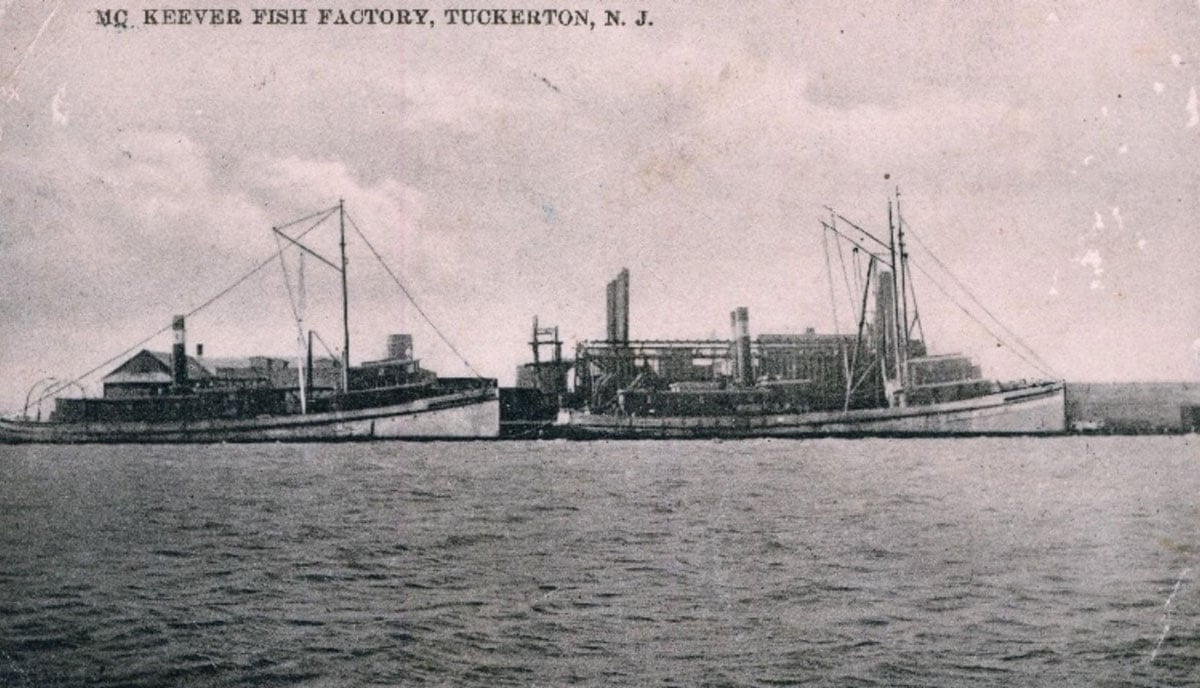
On June 11, 1910 the McKeever Brothers of Brooklyn, NY took ownership and control of the Crab Island Fish Factory there first act was to rebuild the old wooden factory with modern reinforced concrete factory with two new industrial furnaces. By 1913 Tuckerton and Little Egg were becoming the center of the menhaden industry on the Jersey Coast with McKeever producing 10,000 barrels of bunker annually into 1000 barrels of oil and 20 tons of fish fertilizer.
The factory running none stop with seven Steamers in full operation and the furnaces staying hot. By the late teens and early 20s the bunker population was in decline and was not producing the same numbers as before. With the Brothers being business men they were building Ebbits field for the Brooklyn Dodger and used all the guano fertilizer to fertilize the field.
By 1924 the factory went up for sale and was sold to the Island Fertilizer Company. Not a lot is known about Island Fertilizer Company, only that they were in business from 1924 to 1926 and then went into partnership with the Newport Fertilizer Company.
The Newport Fertilizer Company was a different type of fertilizer operation, and instead of using bunker they came up with the idea of using trash. They had a contract with the booming resort of Atlantic City whereby all of the city’s trash was barged to the factory and produced into fertilizer for animal meal and farms. The factory was in operation from 1926 to 1934 until it was put up for sale once again.
1935 To 1982
The factory was purchased by Howard Smith of Monmouth County in 1935 and was giving a full 9-year overhaul to bring the factory into full working order, as well as dredging a new channel in Little Sheepshead Creek making it a straight shot to the new loading dock on Great Bay Boulevard. The fish factory was in full operation again by 1944 under the names Smith’s Fish Products Company and Smith’s Fish Meal Company Inc.
| MENHADEN MANAGEMENT |
| The next meeting of the Atlantic States Marine Fisheries Commission (ASMFC) takes place from August 4 to 6 at the Westin Crystal City in Arlington, VA. The Atlantic Menhaden Management Board will meet from 2 p.m. to 5:30 p.m. on August 5 to consider approval of Draft Addendum II for public comment which could modify the Chesapeake Bay Reduction Fishery Cap. For details and webinar instructions go to ASMFC.org. |
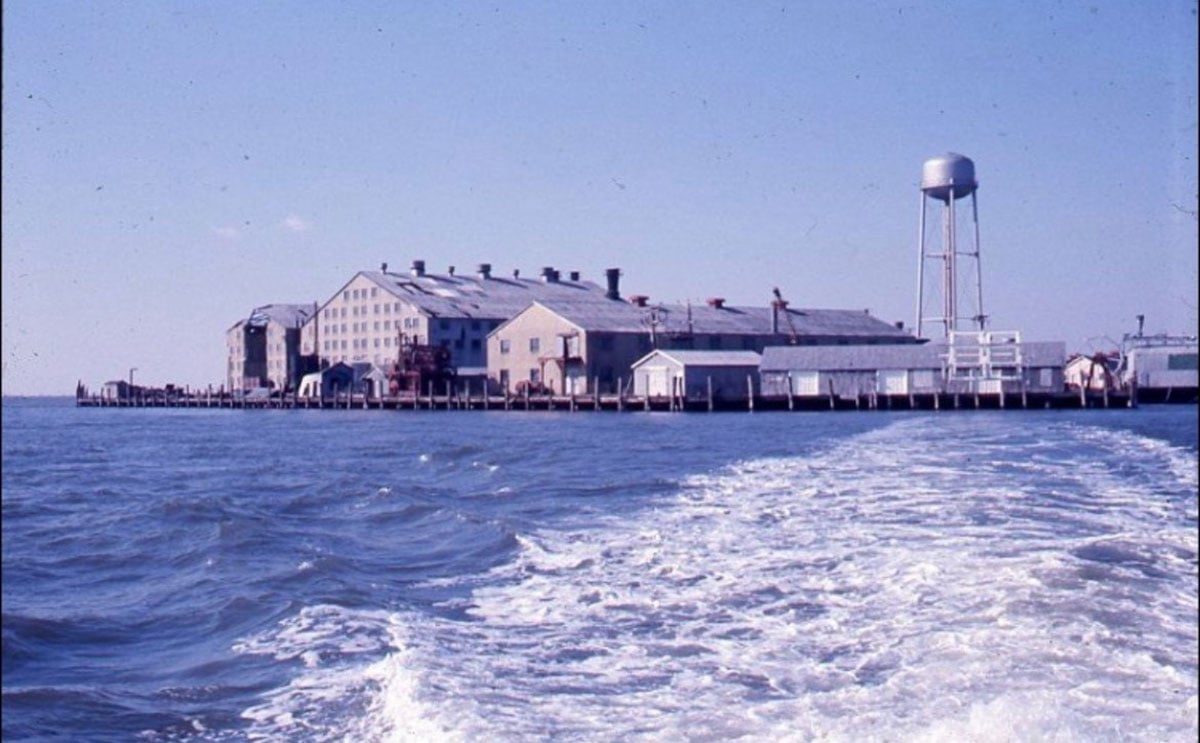
With a fully renovated factory and bunker in the Atlantic they started fishing and the factory was in great standing. There were five oil storage tanks on the island at that time that could hold half a million gallons of fish oil each a brand new 20,000-gallon water tower to supply the factory with water. An air strip was also built for the bunker spotter planes that radioed the bunker boat to go to where the bunker pods could be found.
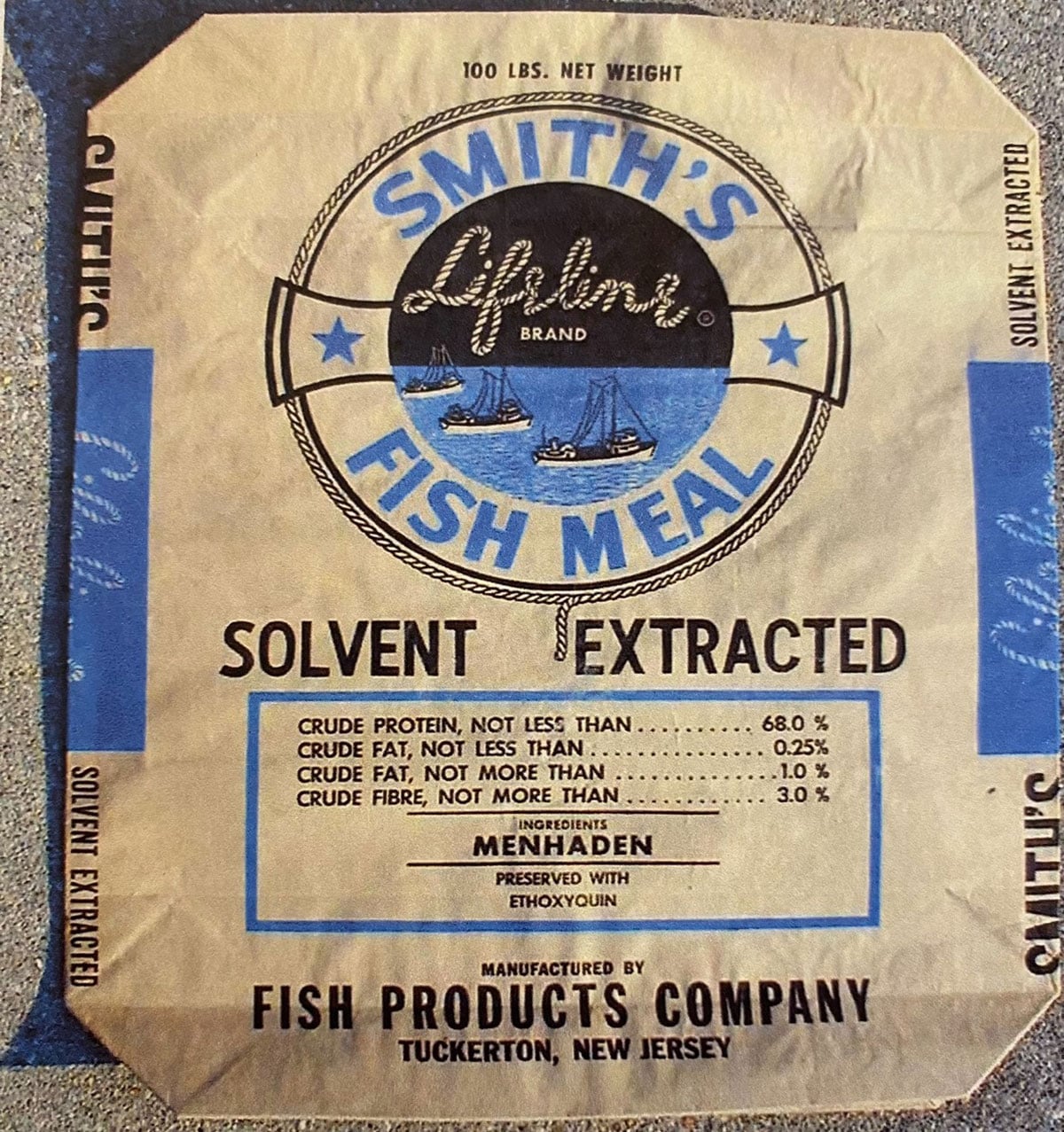
By the 1950s they were producing fish oil and animal feed that was packed in 50- and 100-pound bags; the period from 1952 to 1956 saw the plan processing 200 million menhaden annually. The fish oil was used in paint in the U.S. but when exported to Canada and Germany the oil was used in margarine. Starting in 1963 they started to produce a high protein fish flour, and mainly selling their products to Purina Pet Products.
The factory was in good standing until 1973 when fines where being brought on the factory by the New Jersey Department of Environmental Protection (NJDEP). The plant ending up closing on January 1, 1974. Later that year the NJDEP bought the factory for $100. Once the state took ownership of the property it was deemed an environmental hazard, and funds were allocated to have the factory demolished and turned back into protected marshlands. By 1978 the allocated funds were moved for more urgent matters.
In 1982 a large fire started and burned for five days destroying a lot of the factory and outbuildings. Since the fire nothing has been done to the factory or upon the island where it stands.
As It Stands…
| BUNKER BOOKS |
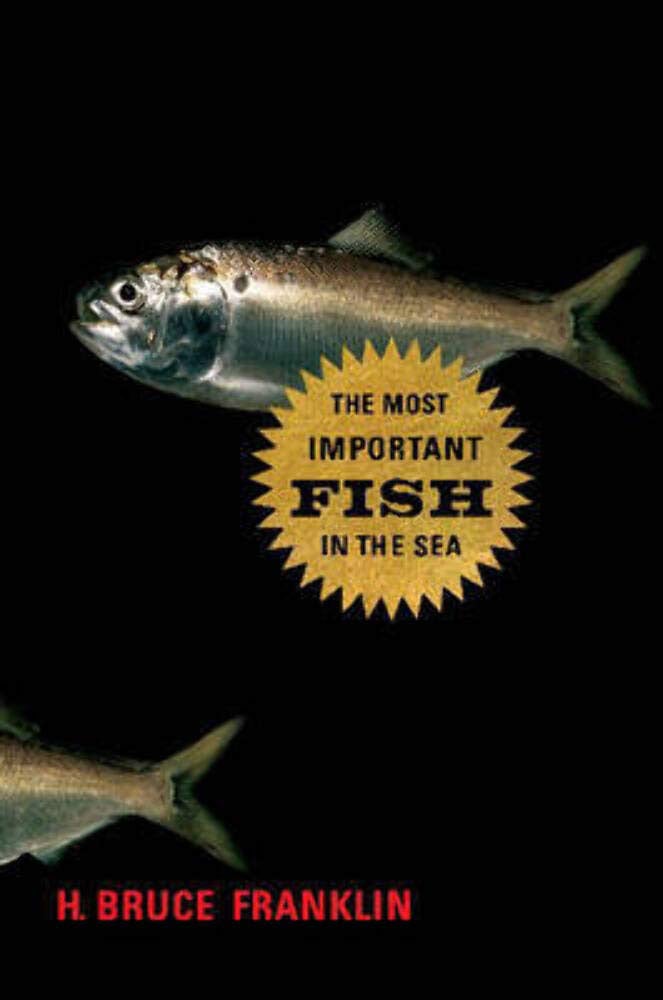
The Most Important Fish in the Sea: Menhaden and America By H. Bruce Franklin (Island Press) In this brilliant portrait of the oceans’ unlikely hero, H. Bruce Franklin shows how menhaden have shaped America’s national—and natural—history.
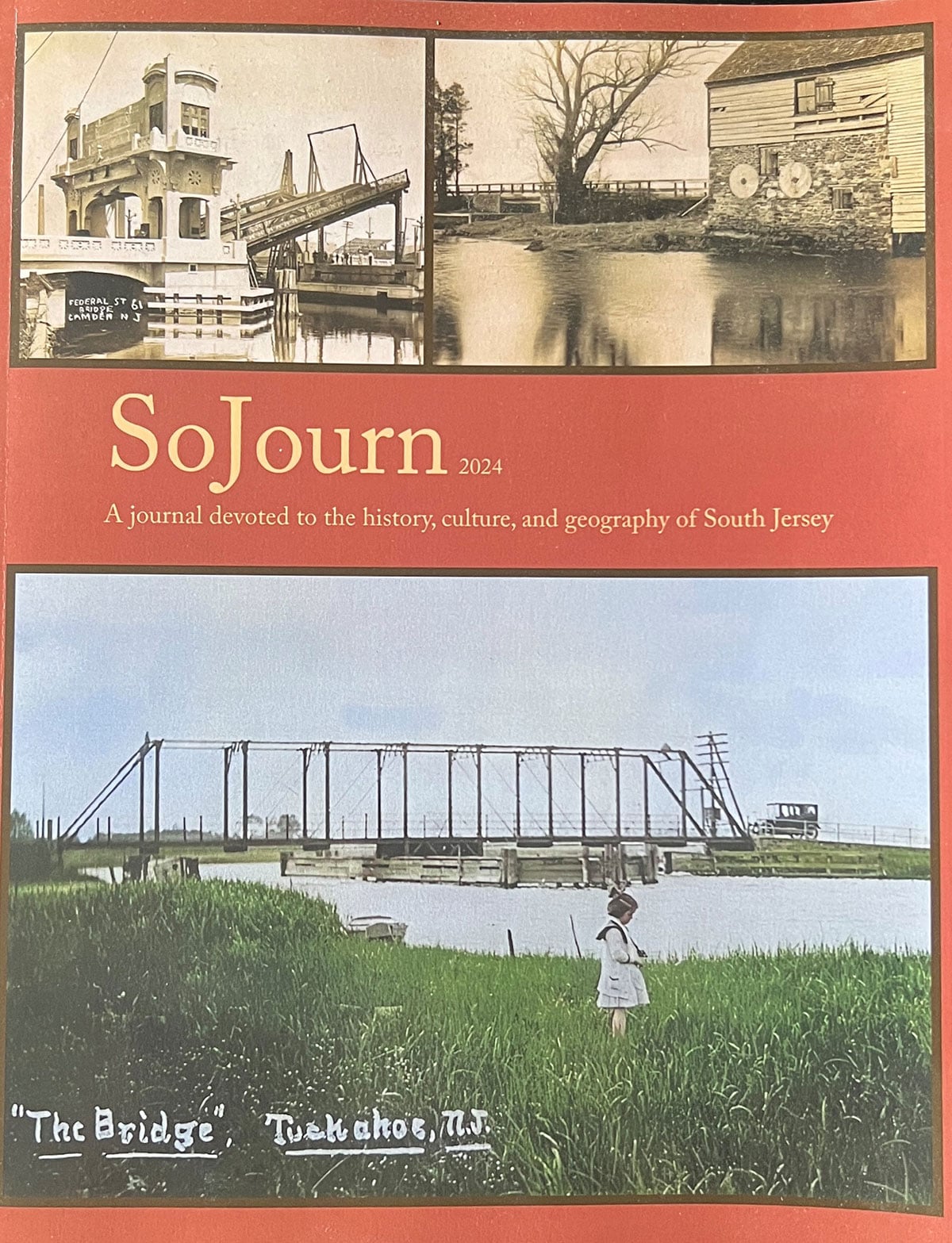
The Crab Island Fish Factory: The Development and Collapse of a City in Great Bay By Kenneth W. Able and James Allen (SoJourn Volume 8 / 2024) SoJourn is our annual journal devoted to the history, culture, and geography of South Jersey. All issues are available at Second Time Books in Mt. Laurel, the Stockton University Campus Center Bookstore, the AtlantiCare Regional Medical Center gift shop, and Amazon. |
There was rumor in the 1990s that casino developers wanted to purchase the island, depollute it, reconstruct a small scale factory and build a small resort on the island. In the early 2000s the new talk was that a pair of wind turbines and a substation would be placed on the island, along with reconstruction of the old factory. But again, these may have all been rumors. As of today the property is off limits to the public, still being considered an environmental hazard due to unstable buildings and sunken oil and water tanks.
Though the fish factory is now just a shell of what it once was it is amazing that there are buildings that are still standing, even though Mother Nature has taken back a lot of the island. Having grown up in Tuckerton, the fish factory has always been a special place for me. I caught my first striper there off the sod banks of the factory in 1997 after my dad and uncle ran the boat up on the marsh; we walked the sod banks throwing broken back Rebels and I ended up catching a 31-inch striper.
I am always driving on Seven Bridges Road, or sitting at the old loading dock pad; it’s where I’ve had some of my deepest thoughts and greatest writing activities. Actually, it’s where I wrote this article while sitting there.
The old fish factory site has been a hub for great fishing due to the deep water channel of Newman’s Thorofare; to think back at the amount of fish scrap dumped from the processing plant, and also the bycatch from washing the decks of the bunker boats, it must’ve acted like a natural chum slick for the fish to come in and feed for years. The factory was also great for traveling duck hunters. There was even a clubhouse on the back side of the property by the airstrip with lodging, and a few salt ponds with artisanal wells so they didn’t freeze in the winter, along with pit blinds for waterfowl hunts. It is now a picturesque location for the professional and amateur photographer with the large standalone building with a towering water tower in the marsh.
In 2002, New Jersey state law was enacted strictly prohibiting the harvest of menhaden from state waters for the purpose of fish meal reduction.
The author who owns Keeney’s Marina on South Green Street in Tuckerton gathered information for this article from newspaper articles and historical documents from the Tuckerton Beacon and New Jersey Maritime Museum, as well as with history passed down through Tuckerton locals.