Breaking down the October surf run from baits to conditions to timing.
For surfcasters across the region, October is the month that defines the season. After a summer of waiting, chasing scattered fish, and enduring slow stretches, the fall migration finally pushes stripers within reach of the surf rod. The beaches are quieter, the nights longer, and the fish hungrier. Across the coast, striped bass are on the move, feeding with urgency as they make their way south.
But opportunity doesn’t guarantee success. October striper fishing is equal parts timing, preparation, and presentation. Whether you’re casting into the frothy wash at Montauk, probing the sandy cuts of the Jersey Shore, or working the rocky shoreline of New England, the techniques you use this month will determine whether you leave with tired arms or only footprints in the sand.
Striped bass are creatures of habit, following predictable seasonal patterns. In spring, they move north, and in fall, they retrace those steps south. October is the heart of this return trip. Schools of bass stage at migration “landmarks” like inlets, river mouths, rocky corners, and sandy points where currents and baitfish collide.
Understanding this movement is the first step. In New England, fish that spent summer around Cape Cod and Boston Harbor begin sliding west and south. Long Island’s East End becomes a funnel, concentrating stripers before they spread down the South Shore and into the bays. In New Jersey, local fish mix with the first waves of migrants, sparking the run that will define the rest of the year.
The takeaway? Fish the funnels. Focus on points, jetties, and bars where bait is forced into narrow channels. These are the highways of the migration, and bass rarely bypass them.
Bait Dictates The Bite
Striped bass are opportunistic, but in October their choices are largely dictated by what forage is abundant. Each type of bait demands a different approach:
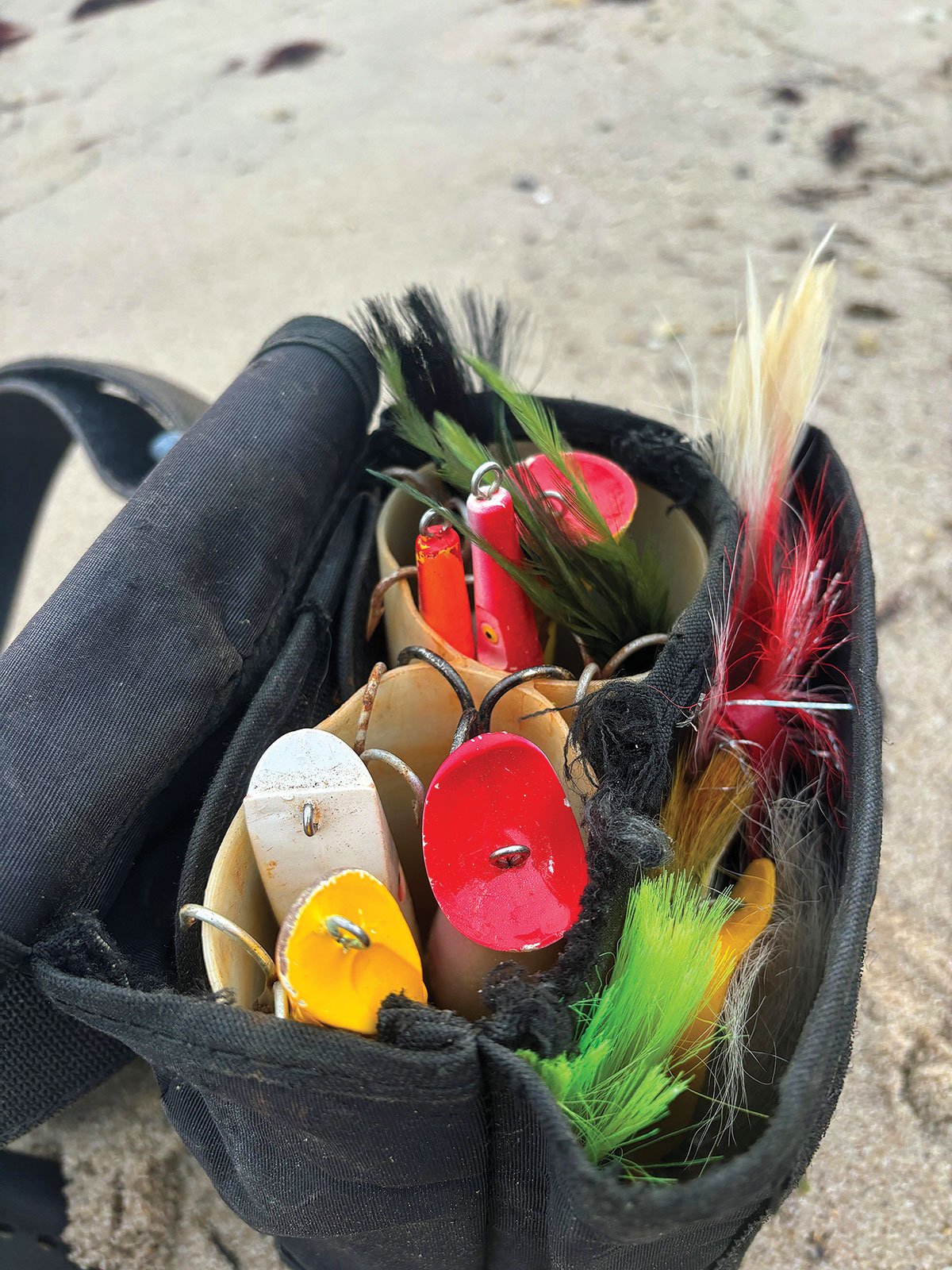
Mullet: Early October sees mullet pouring from inlets along Long Island and New Jersey. These slim baitfish move in pods and hug the surf. Pencil poppers and spooks worked with sharp rod snaps mimic the frantic skipping of mullet. After dark, Super Strike darters, bottle plugs, and large metal lips fished slowly along the edge of an inlet rip are deadly.
Peanut Bunker: Perhaps the most iconic October bait, peanuts draw frenzied blitzes. During daylight, small tins, epoxy jigs, and Mag Darters are perfect. In blitzes, go with lighter tackle for fun, but always keep a heavier rod ready as bigger fish often lurk when the smaller ones pass.
Anchovies and Spearing: These tiny baits often appear in massive clouds. Stripers respond with slashing surface feeds. Slim metals, epoxy jigs, and teasers get bites when nothing else matches the profile. Cast into the edges of the feed, not the middle, to target the bass picking off stragglers.
Sand Eels: By mid-to-late October, sand eels dominate many beaches from Montauk to Jersey. Needles, slim soft plastics, and bucktails tipped with straight tails imitate them perfectly. The retrieve should be steady and deliberate, keeping the lure near the bottom.
Recognizing which bait is present and adjusting your offerings is the difference between a banner night and a skunk.
Organized Chaos
October surfcasters live for the blitz. Birds diving, bait spraying, and stripers shredding the surface is as exciting as it gets. But blitzes are fleeting, sometimes lasting minutes, other times only seconds. Preparation is key.
Carry multiple rods rigged with different lures. One should hold a tin or epoxy jig for distance, another a topwater for close-range mayhem. Keep leaders pre-tied with clips for instant lure changes. During a blitz, hesitation kills. Cast into the windward edge of the chaos, retrieve quickly, and be ready for instant strikes.
While blitzes are a gift, they also create a false sense of security. Once the surface action dies, many anglers pack it in. The sharpies stay, switching to subsurface lures and probing the structure around the blitz zone. Often the biggest fish feed after the show, picking off stragglers in the wash.
Nighttime Giants
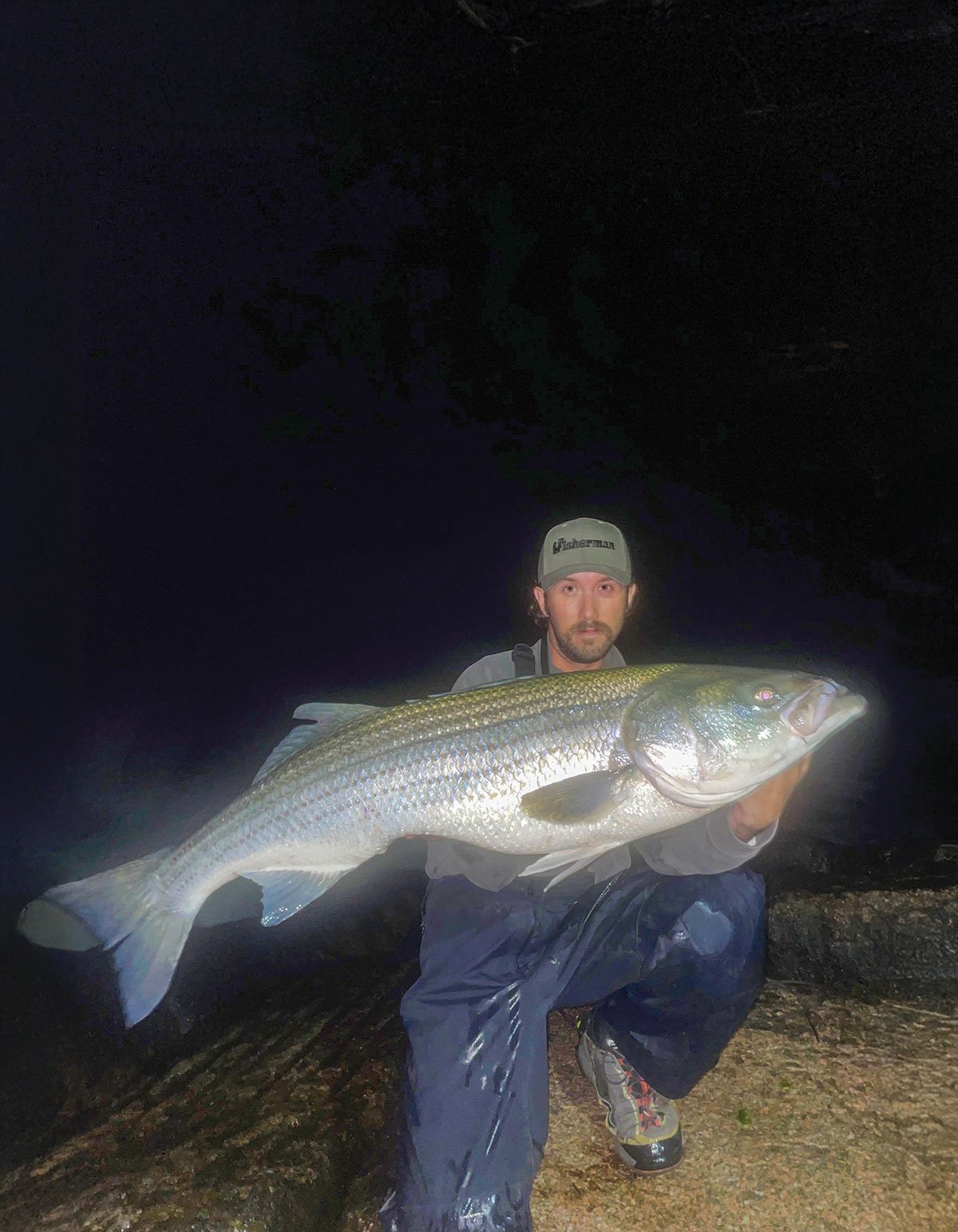
If blitzes are the show, nighttime is the grind—and where the rewards are greatest. Surfcasters who log their biggest stripers often do so between midnight and dawn in October.
Night fishing is slower, quieter, and more methodical. Large plugs are the staples – darters, bottle plugs, and metal lips worked against the current or across the rip lines of inlets and points. Needlefish plugs shine when sand eels are abundant, their slim profile and subtle wiggle a perfect match.
Soft-plastic eels rigged on jigheads or weighted hooks are another staple. Cast them uptide, let them sweep naturally with the current, and feel for subtle takes on the swing. Many trophy bass bite softly, the strike no more than a faint tap before the rod loads.
Patience is the key. Unlike the chaos of daytime blitzes, night fishing often means long stretches of silence interrupted by single, heart-stopping strikes.
Reading The Surf
| THE BUCKTAIL ADVANTAGE |
| If there is one lure that transcends regions and bait types, it’s the bucktail. A 1- to 2-ounce bucktail, tipped with jig strip or a curly tail, is as close to universal as it gets. Don’t be afraid to go a little less or a little more on the weight depending on the conditions. Carrying a few different sizes will cover most situations.
In rough surf, bucktails cut through chop and stay in the strike zone when plugs get tossed around. In calm bays, they can be hopped slowly across the bottom to mimic crabs, shrimp, or sand eels. Work them with short, controlled lifts of the rod tip, keeping contact with the bottom. When in doubt, tie on a bucktail. |
Being able to “read” water is the most valuable skill a surfcaster can develop. Bass use the surf’s structure to their advantage, conserving energy and ambushing prey.
Cuts and Bars: On sandy beaches, look for breaks in the outer bar where water funnels back out. Cast diagonally across the cut and retrieve through the outflow. Bass use these slots like conveyor belts, picking off bait as it washes seaward.
White Water: On rocky coasts, white water provides cover. Bass will hold just beneath the foam, darting out to grab bait. Cast directly into the froth with swimmers or bucktails and retrieve slowly, keeping your lure in the strike zone.
Outflows: After October rains, rivers and creeks dump bait into the surf. Position yourself at the edges of these outflows. Cast swimmers or darters across the current seam where bass wait for easy meals.
Wind and Waves: Don’t avoid rough conditions. A stiff onshore wind stacks bait tight to the beach, and big fish often feed aggressively in the churn. Suit up with extra layers and lean into the weather—the payoff can be incredible.

Tackle Talk
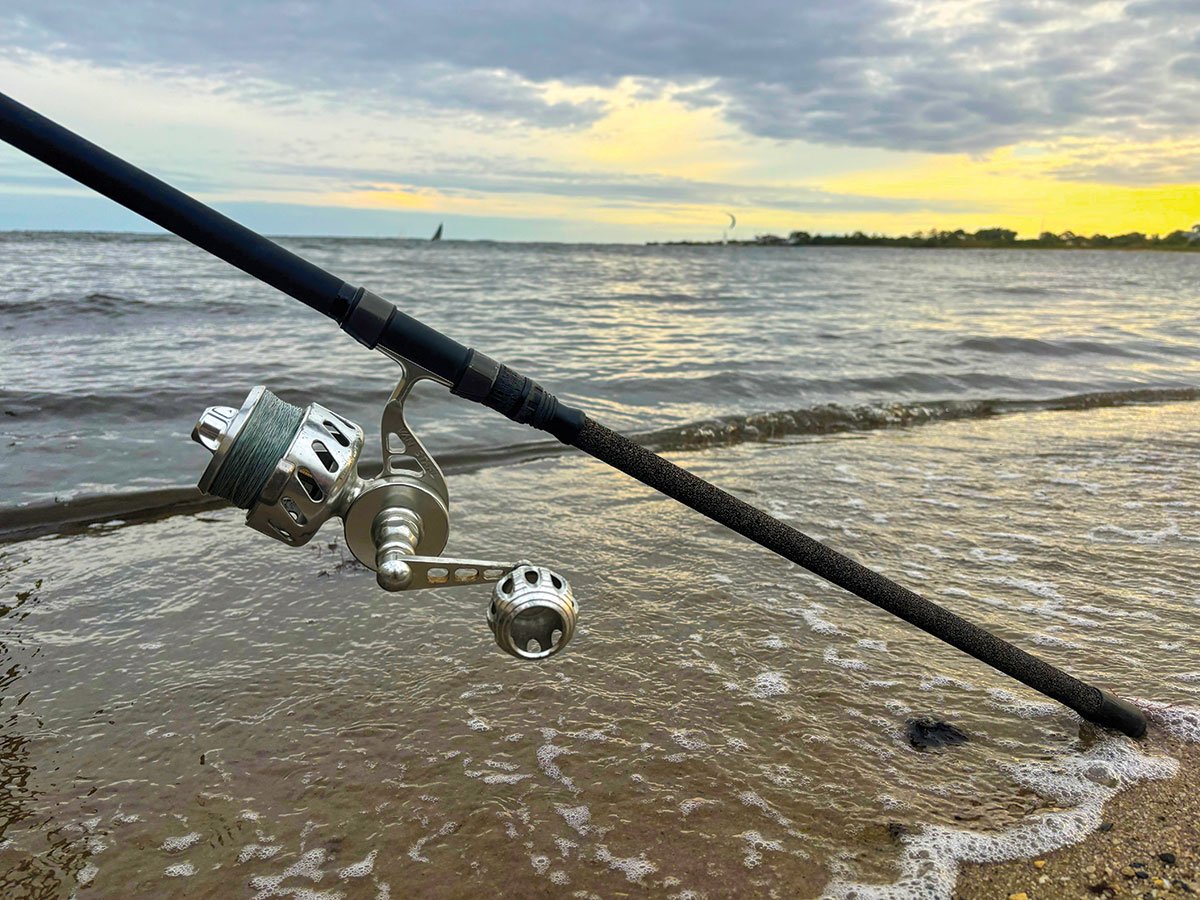
A versatile setup is essential for October surf fishing. A 10 to 11-foot medium-heavy surf rod rated to 3 ounces handles most lures. Pair it with a sealed spinning reel spooled with 30- to 40-pound braid and a 40-pound fluorocarbon leader.
Carry leaders pre-tied with clips to change lures quickly. For night fishing in rocky terrain, step up to 50-pound leaders to withstand abrasion. If bluefish are in the mix, consider mono leaders for extra protection.
Always pack light—one plug bag with a mix of topwaters, swimmers, needles, tins, bucktails, and soft plastics covers most scenarios. The more time your lure spends in the water, the better your odds.
| REGIONAL APPROACHES |
| New England: Rocky terrain and fast-moving water define the game. Metals and bucktails rule daylight blitzes, while darters and metal lips dominate the night. Rhode Island’s breachways, Cape Cod Canal, and rocky Massachusetts points are all staging grounds.
Long Island: South Shore inlets flush mullet early in the month, while sand eels take over by Halloween. Montauk remains the Mecca—daytime blitzes on peanuts, nighttime plugging with needles and darters. On the North Shore, smaller swimmers and bucktails excel in the harbors. New Jersey: Bunker, both adults and peanuts, are the main course through much of October, fueling the first daytime blitzes along the oceanfront. The central and northern coast sees a steady diet of peanut bunker blitzes well into November before the sand eels push in, making needles, teasers, and bucktails essential. Inlets and back bays remain productive after dark with soft plastics and swimmers. |
In October, tide and moon cycles can make or break a trip in terms of timing the bite.
Tides: Outgoing tides around inlets concentrate bait, while incoming water on open beaches often triggers activity as waves wash over the bar. Learn the “money tides” at your local spots and commit to fishing them.
Moons: New and full moons magnify movement. Stronger tides mean more bait flushing and more fish feeding. Many surfcasters schedule their trips around the dark of the moon, when big fish feel most comfortable sliding into shallow water.
Weather: Northeast blows are dreaded by beachgoers but cherished by surfcasters. A stiff wind stacks bait, churns the surf, and sparks frenzied bites. Don’t shy away from foul weather—it often produces the best action of the season.
October surf fishing is not about casual strolls on the beach. It’s about commitment—early mornings, late nights, and long hours spent probing water that looks empty until, suddenly, it isn’t. One cast might connect with a 24-inch schoolie; the next could double you over with a 40-pound migrator.
Success comes to those who prepare—those who match the bait, fish the right tides, and stay on the sand when others pack up. Across the rocky points of New England, the bluffs of Montauk, and the sandy stretches of New Jersey, the stripers are moving. October is here, and with it, your best shot at surfcasting glory.