Approximate Location: 41°0.555’N · 73°25.141’W
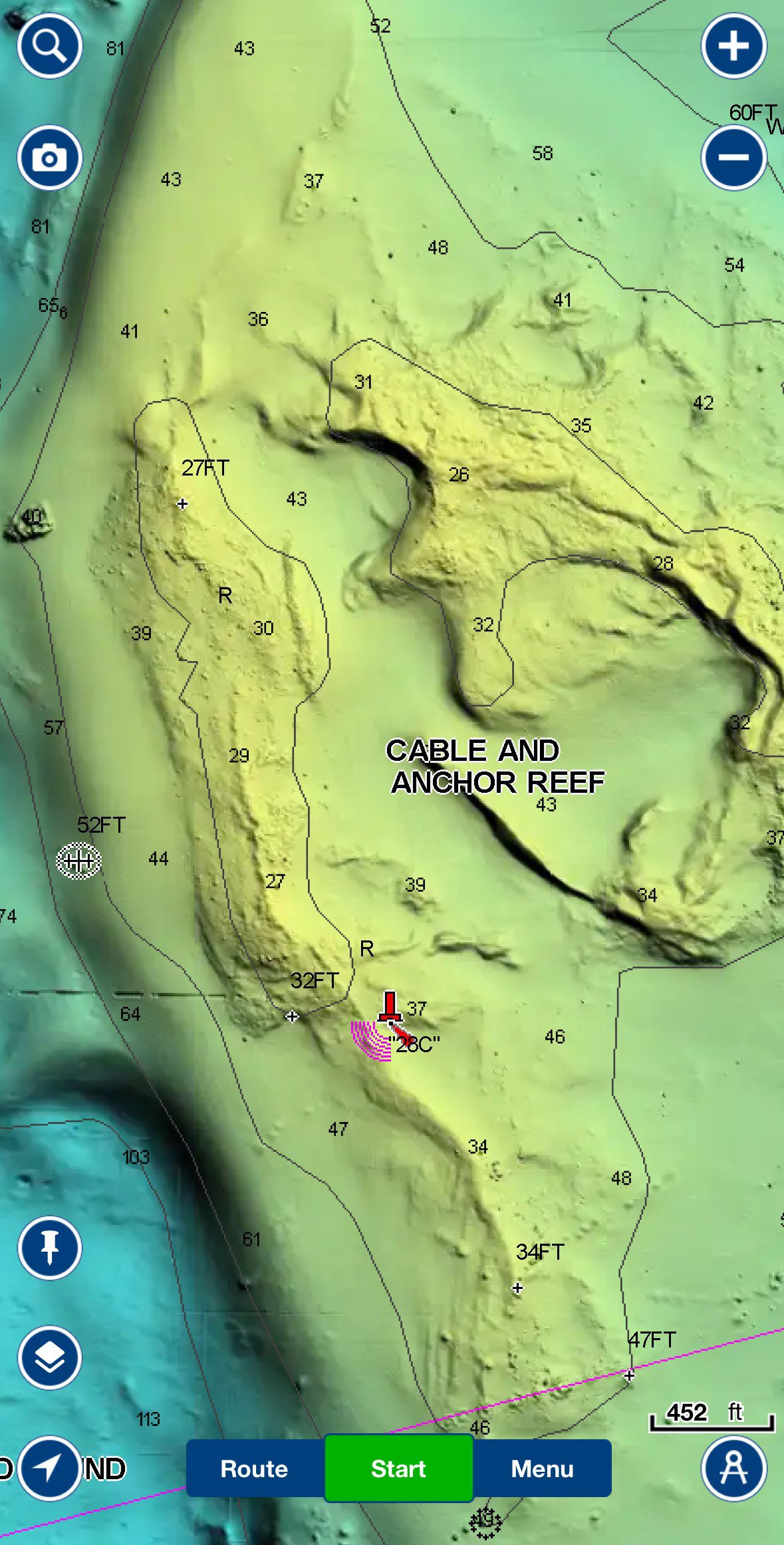
Tucked along the western portion of Long Island Sound, in the vicinity of buoy 28C, lies Cable Reef—also known to some as Anchor Reef. According to Rob Berry of Hi Hook Bait and Tackle in Huntington, this piece of bottom is one of the Sound’s most productive fishing grounds, offering action through much of the season.
The structure itself is a mix of rocky ledges and uneven bottom, with high spots rising into 30 feet of water and deep sections dropping to nearly 70 feet. Adding to the attraction are two sizable wrecks that sit just south of the reef. Between the natural rock piles and wreckage, this place is a magnet for predators, and Rob insists that when you send a bait down to the bottom here, you never quite know what you’re going to catch.
The season at Cable Reef kicks off in spring with striped bass making their presence known. Anglers trolling Mojos and bunker spoons across the high spots during an outgoing tide regularly connect with fish to 45 pounds. When schools are stacked tightly on the reef and the tide eases toward slack, flutter spoons—especially in chartreuse—produce some of the most consistent hook-ups of the season.
The squid runs that push through the Sound each spring bring another layer of opportunity. Trolling or jigging white and pink parachute rigs over the high ground becomes highly effective when the cephalopods arrive, often drawing in bigger bass that feed heavily before moving on.
While stripers are the early-season headliner, the reef offers plenty of bottom-fishing opportunities. Jumbo sea bass often station themselves along the rocky ledges, and in May and June, they’re present in impressive numbers. Unfortunately, the recreational season for sea bass doesn’t open until June 23, and by then, heavy pressure from commercial pin hookers has usually thinned out the larger fish. Still, the reef reloads through the summer, and anglers willing to put in the time can pick away at quality keepers well into October and November. Hi/lo rigs baited with clams remain the most reliable approach.
Porgies, meanwhile, are a constant presence from spring through fall. The first wave arrives in May as big “scup” move inshore to spawn, providing fast-paced action until mid-June. As the larger fish head back offshore, their smaller siblings fill the void, sticking around until October. Once again, a simple clam-baited hi/lo rig works wonders, and porgy fishing remains a popular and dependable option for family trips and filling coolers.
As good as the reef can be in spring and summer, it’s the fall blackfish run that makes Cable Reef a true hotspot. From late October through November, tautog crowd the structure, keeping rods bent and anglers busy. Fish topping 10 pounds are not unusual, and a few true “whitechin” bulldogs exceeding 12 pounds are landed here each season.
The peak usually arrives once porgies have vacated and water temperatures settle near the 55-degree mark. Green crabs remain the standard bait, but those who score small white leggers—or “white crabs”—often tempt the largest fish on the reef. The wrecks just south of the reef are particularly productive, though notoriously sticky. Be prepared to lose gear and carry plenty of extra hooks, sinkers, and leaders.
Because blackfish will bury themselves in structure the moment they feel a hook, heavy gear is mandatory. Rob recommends stepping up to 60-pound braid, 8-ounce sinkers, and stout rods capable of turning a fish quickly. It’s a brute-force game, and those who hesitate often donate rigs to the rocks. Anchoring properly is also critical. A grapple anchor is best here, since it holds over rocky bottom but can be freed without the risk of losing it the way a Danforth might.
What makes Cable Reef unique is the variety it offers throughout the season. From early-spring stripers on spoons and parachutes, to summer porgies and reloading sea bass schools, and finally to fall’s bruising blackfish, the reef provides opportunities for nearly every style of angler. Add in the two wrecks nearby and you have a piece of bottom that continues to surprise those who fish it.
For anglers looking to gear up, Hi Hook Bait and Tackle in Huntington is the go-to stop. Rob and Danny are always willing to share insight on the reef’s current bite and can set you up with the right rigs, bait, and advice to make the most of your trip. Whether you’re trolling the high spots, working jigs for tog, or filling a pail with scup, Cable Reef remains one of the Sound’s most reliable and versatile hotspots.