Why leave all the ‘fish & chips’ fun to the Brits?
Long snubbed by anglers, the spiny dogfish has earned a reputation as a nuisance when you find them at the end of your line, while targeting bass or bluefish. But beneath its sandpaper skin lies some surprising culinary potential. It’s time to rethink this so-called “trash fish.”
While often disregarded by U.S. seafood fans, dogfish are in high demand across the Atlantic. In the United Kingdom for example, in parts of Europe, spiny dogfish make up a large portion of the fried fish trade, served up in newspaper-wrapped orders of fish and chips. As described by NOAA Fisheries, “there is little consumer demand for spiny dogfish in the United States, but it is commonly used in Europe as the fish in fish and chips.”
U.S. wild-caught Atlantic spiny dogfish is a smart seafood choice because it is sustainably managed and responsibly harvested under U.S. regulations. Yet despite the commercial value abroad, here at home, most anglers toss them back without a second thought.
Why the disconnect? A big part of it comes down to processing. If not handled properly, dogfish quickly develop an acrid ammonia-like taste caused by urea buildup in the meat. The clock starts ticking the moment they hit your deck, and what you do next makes all the difference between a meal and a mistake.

There are a few steps I follow religiously when I’m planning to harvest dogfish – and it all starts with ice. Cold is your best friend when it comes to preserving flavor and preventing that ammonia taint. I prefer sharks in the 30-inch-and-up range because they offer a better meat-to-work ratio. Anything smaller, and you’re spending more time than it’s worth for a few skinny fillets.
| NOAA FISHERIES SPECIES PROFILE |
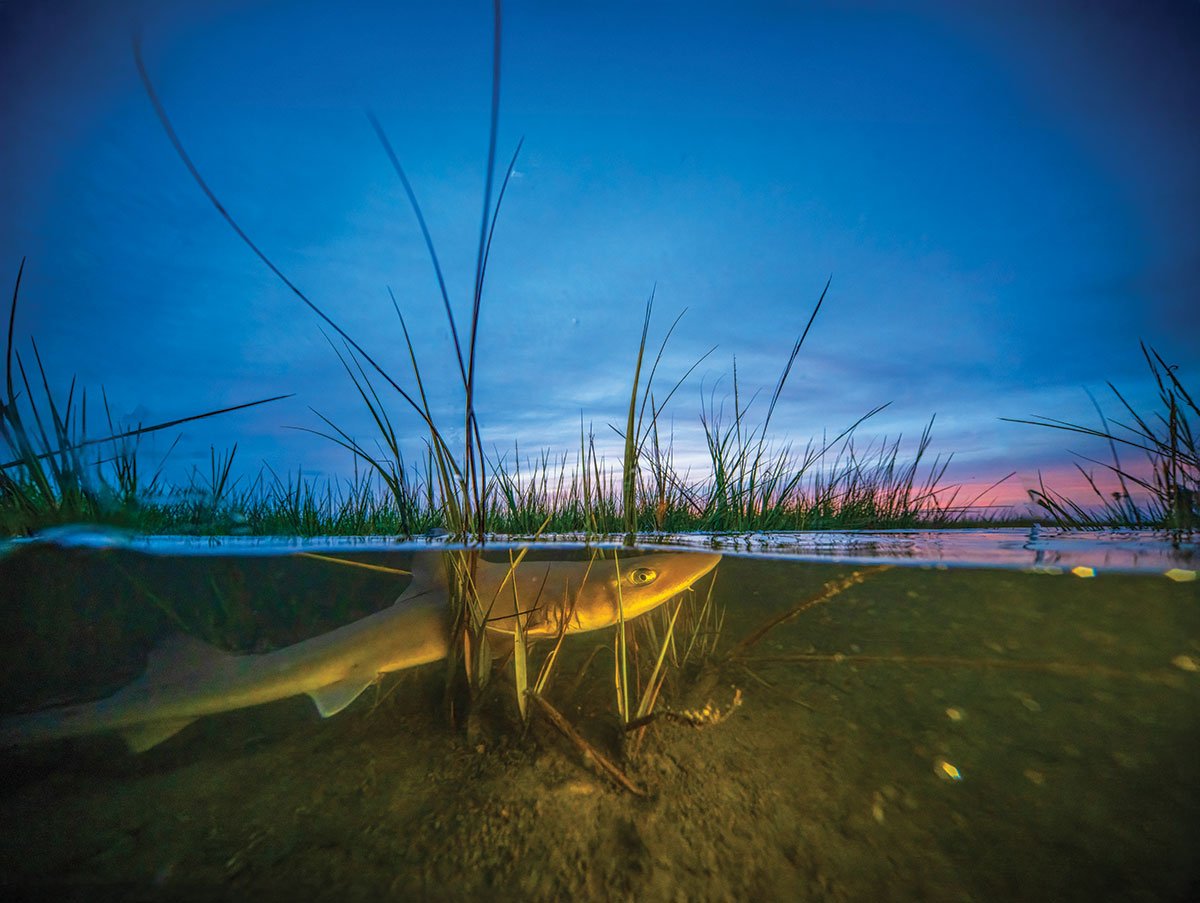
| Also known as dogfish shark, cape dogfish, cape shark, spring dogfish, spiked dogfish, grayfish, spur dog, or piked dogfish. Spiny dogfish can be found in the North Atlantic and North Pacific Oceans, mostly in the temperate and subarctic areas. In the Northwest Atlantic, they are found from Labrador to Florida and are most abundant between Nova Scotia and Cape Hatteras.
In terms of habitat, spiny dogfish live inshore and offshore, usually near the bottom but also in mid-water and at the surface. They swim in large schools and migrate seasonally with changes in water temperature. Much of the population travels north in the spring and summer, and south during the fall and winter. Some spiny dogfish remain in northern waters throughout the year and move offshore during the winter. Spiny dogfish are slim, with a narrow, pointed snout and characteristic white spots. They get their “spiny” name from the two dorsal fins with ungrooved large spines; anglers handling spiny dogfish should take precaution with those spines which can inflict damage. Males grow up to 3.3 feet, while females grow up to 4 feet According to the 2023 stock assessment, Atlantic spiny dogfish is not overfished and not subject to overfishing. To see the author’s presentation in video form point your camera phone to the QR code to open up the YouTube link. |
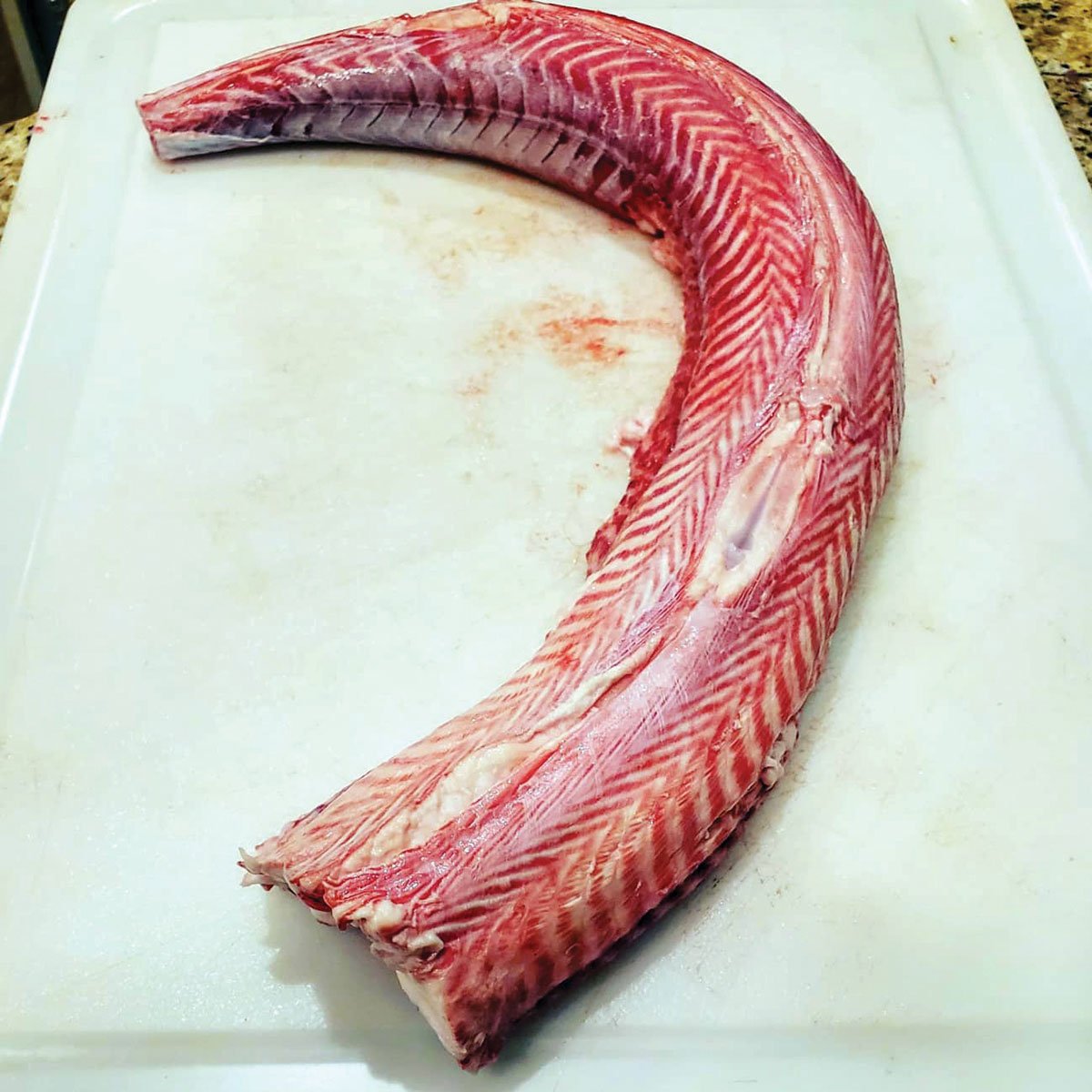
Once landed, I’ll humanely dispatch the fish with a spike or knife between the eyes for a quick, clean kill. Immediately after, I remove the head and gut the fish. This helps eliminate sources of urea and begins the cooling process. Then, the fish goes straight into a cooler filled with seawater and ice. This step is critical, as rapid chilling not only firms up the meat but also bleeds the fish and locks in a clean flavor profile.
After about 20 to 30 minutes, I fillet and skin the fish. Fortunately, dogfish have thick, leathery skin that actually makes them easier to work with than many other species. Their firm, white meat holds up well to all kinds of cooking methods. Once filleted, the meat goes back on ice until I’m ready to cook.
When it comes time to eat, you’ve got options. Dogfish are incredibly versatile, and their firm texture makes them ideal for frying, grilling, or baking. One of my favorite ways to prepare them is “shark bites” with small chunks of meat dredged in seasoned cornmeal and deep-fried until golden brown. Serve them with a spicy remoulade and a fresh mango salsa, and watch them disappear faster than any bass fillet.
The truth is, the dogfish doesn’t deserve the bad rap. Treated with respect from the moment it’s caught to the moment it hits the plate, it can be a delicious and sustainable addition to your seafood repertoire. Next time you reel one in, consider keeping it. You might just discover your new favorite catch.

Shark Bites W/ Spicy Remoulade & Mango
The first step in the process is processing your spiny dogfish. Immediately after catching one, humanely dispatch of it, then remove the head, guts, and put in a slurry of ice and water (I use ocean water!) Once it’s cooled and bled, fillet and skin, then keep on ice until ready to cook.
Step 1: Cut the two loins of your dogfish into bite size chunks, and marinate with 2 cups of milk and a quarter-cup of hot sauce for a minimum of 1 hour, up to 24 hours.
Step 2: Using a fork, mix 2 cups of cornmeal, and 1 tablespoon each of salt, pepper, smoked paprika and garlic powder. Set aside until ready to dredge your dogfish chunks.
Step 3: To make remoulade sauce mix 1 cup of mayonnaise and 3 tablespoons of hot sauce. Salt and pepper to taste.
Step 4: For mango salsa, cut up two mangoes into cube. Dice half an onion with two jalapenos and a half-bunch of cilantro. Mix everything gently with the juice from a whole lime, then salt and pepper to taste.
Step 5: Heat oil on stovetop in a pot to 350 degrees. If you have a thermometer, great! If not, medium heat will usually get you close to this temperature. You don’t want to make it too hot as it will burn your fish, too cool will yield very greasy fish. Toss your spiny dogfish chunks in the cornmeal batter (Step 2) and fry until they start to float. Don’t overcrowd your chunks in the fryer! Drain on paper towels.
Once you’re ready to serve, top with remoulade (Step 3) and mango salsa (Step 4).